
Obesity is one of the most common health problems found in today’s adults. This not only affects your lifestyle but is a significant cause of disease.
And when it comes to losing weight through diet and exercise, it’s a difficult and long process. If you’re suffering from obesity related problems for a long time and are looking for a solution. Then Gastric Sleeve and Gastric Bypass surgeries are the best option for you. But which one is best?
In this blog post, we’ll try to understand the difference between gastric sleeve and gastric bypass. So, you can choose the best bariatric surgery options for yourself.
But before getting into the gastric sleeve vs gastric bypass. Let’s first understand what bariatric surgery is.
Bariatric surgery is a weight loss surgery for individuals who are suffering from obesity related problems. In this process, individuals lose weight because of the alteration in their digestive system.
There are two common types of bariatric surgery specialist usually performs: are gastric sleeve surgery and the gastric bypass surgery. Now let’s understand the difference between gastric sleeve and gastric bypass.
Gastric Sleeve vs. Gastric Bypass: A Clear Comparison
If you’re exploring weight loss surgery options, two of the most common procedures are the gastric sleeve and the gastric bypass
What’s the Difference Between Gastric Sleeve and Gastric Bypass?
Both the gastric sleeve and gastric bypass surgeries are types of bariatric surgery. Both help with weight loss by making your stomach smaller.
A smaller stomach means:
- You feel full even after the intake of a small amount of food.
- Your body makes less ghrelin, the hormone that makes you feel hungry.
But both of these surgeries are done differently.
Gastric Sleeve Surgery (Sleeve Gastrectomy)
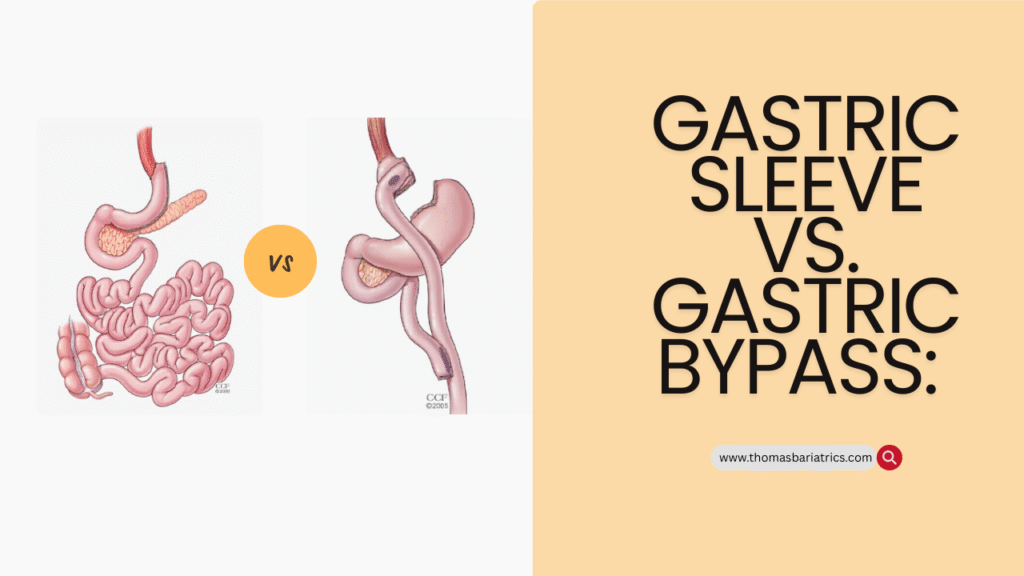
Also known as Sleeve Gastrectomy. In this procedure surgeon removes 80% of your stomach.
What’s left is a narrow, tube-like stomach (about the size and shape of a banana).
- No changes are made to your intestines.
- This smaller stomach holds less food and reduces hunger.
Gastric Bypass Surgery (Roux-en-Y Gastric Bypass)
Also known as Roux-en-Y. This surgery is a bit more complex.
In this surgeon creates a small pouch by removing most of your stomach and connects it directly to the small intestine, bypassing a large part of your stomach and a portion of your intestines.
This not only reduces the amount of food intake but also affects how your body absorbs calories and nutrients.
This complex process helps with additional weight loss.
In short:
- The gastric sleeve makes your stomach smaller.
- Gastric bypass makes your stomach smaller and reroutes your digestion to absorb fewer calories. It changes the metabolism of your body.
What are the pros and cons of gastric bypass surgery vs. gastric sleeve surgery?
If you’re considering bariatric surgery, both are effective options for weight loss but come with their own set of pros and cons.
In this, you’ll be able to understand the pros and cons of gastric bypass and gastric sleeve effectively.
Pros and cons of gastric sleeve surgery
Pros:
- Generally safer and simpler: The Gastric sleeve is considered one of the safest bariatric surgery options because the procedure is less complex than gastric bypass.
- Fewer digestion problems: Unlike bypass, it doesn’t interfere with how your body absorbs nutrients, which means you’re less likely to deal with issues like malnutrition or vitamin deficiencies.
- Effective weight loss results: Many people lose around 60-70% of their excess weight and keep it off long-term.
- Improves health conditions: Weight-related issues like type 2 diabetes, high blood pressure, sleep apnea, and PCOS often improve after surgery.
- Can be revised later: If necessary, a sleeve can be converted to a gastric bypass.
Cons:
- Slower weight loss: You may not lose weight as quickly as you would with gastric bypass, though long-term results are often similar.
- Risk of acid reflux: Some people develop or experience worse acid reflux after surgery.
- Possible long-term complications: Issues like GERD (gastroesophageal reflux disease) can appear over time, though they’re not common.
Gastric sleeve benefits and risks
Pros:
- Faster weight loss: Because your body absorbs fewer calories, many patients lose weight faster—around 70-80% of their excess weight, often within the first year.
- More weight loss overall: For those with a higher BMI, Gastric bypass may offer better long-term results.
- Improves health conditions: Like the sleeve, bypass can help reduce or even resolve conditions like type 2 diabetes, high cholesterol, and hypertension.
- It may help with acid reflux: If you have severe reflux, a bypass may be a better choice since it tends to improve those symptoms.
Cons:
- Risk of dumping syndrome: This happens when food moves too quickly through your system, causing nausea, dizziness, or diarrhea.
- Nutrient deficiencies: You may need lifelong supplements because your body won’t absorb nutrients as efficiently.
- More complex surgery: It’s a more involved procedure, which means a slightly higher risk of complications like infections or leaks.
- Long-term issues possible: Some people experience ulcers, bowel blockages, or increased sensitivity to alcohol after bypass.
Weight Loss Surgery Comparison: Sleeve vs Bypass
Complications of Sleeve vs Bypass
| Feature | Gastric Sleeve | Gastric Bypass |
| Procedure Complexity | Simpler | More complex |
| Weight Loss Speed | Moderate | Faster |
| Total Weight Loss | 60–70% of excess weight | 70–80% of the excess weight |
| Nutrient Absorption | Normal | Reduced |
| Risk of Acid Reflux | Higher | Lower |
| Dumping Syndrome Risk | Low | Higher |
| Long-Term Complications | GERD possible | Nutrient issues, ulcers, and alcohol sensitivity |
Which Is Better: Sleeve or Bypass?
There’s no one-size-fits-all answer. The effectiveness of gastric bypass vs sleeve often depends on your current health, weight, and any existing conditions like acid reflux or diabetes.
If you’re looking for faster results and don’t mind taking supplements, Bypass may be the better fit. If you want a lower-risk procedure with fewer digestive issues, the sleeve might be your best option.
Recovery Time for Gastric Sleeve vs Bypass
Recovery is a key part of the journey. Most people return to normal activities within 2–4 weeks after a gastric sleeve and 3–6 weeks after a gastric bypass.
Your care team will guide you through each step and help you adjust your eating habits for long-term success.
What dietary changes are required for a gastric sleeve vs. gastric bypass surgery?
Post-Surgery Diet Changes (Gastric Sleeve & Gastric Bypass)
Immediate Diet Progression:
- Liquid-only diet for the first few days post-surgery
- Transition to puréed foods
- Move to soft foods for 4 to 6 weeks.
- Regular foods after 6 weeks
Long-Term Dietary Guidelines:
- Eat small portions
- Stop eating when you feel full.
- Chew food thoroughly
- Eat slowly
- Take the recommended vitamins and supplements.s
- Stay hydrated throughout the day
- Sip fluids instead of drinking quickly.
- Avoid hard-to-digest foods (e.g., tough meats, bread)
- Avoid carbonated drinks
Stomach Pouch Sizes:
- Gastric bypass: pouch holds about 1 oz
- Gastric sleeve: pouch holds 2 to 5 oz
Additional Notes:
- Overeating can stretch the pouch and lead to weight regain
- Long-term support from a bariatric nutritionist is highly recommended.d
What’s the average cost of gastric sleeve vs. gastric bypass surgery?
Cost of Bariatric Surgery (Gastric Sleeve & Gastric Bypass)
Average Cost (as of 2017 Review):
- Range: $7,423 to $33,541
- Average: $14,389
Factors Affecting Cost:
- Geographic location
- Type of bariatric surgery (gastric bypass is usually more expensive than the gastric sleeve)
- Presence of surgical complications
Insurance Coverage:
- Varies by insurance provider and state
- Medicare/Medicaid may cover if:
- Specific criteria are met
- A healthcare professional recommends the surgery.
- Private Insurance may require:
- Use of an approved surgeon or facility
- Proof that non-surgical weight loss methods were unsuccessful
- Completion of a medically supervised weight loss program
If you’re considering weight loss surgery, we can help
If you’re thinking about weight loss surgery as a way to improve your health, schedule a visit with us.
We offer both medical and surgical weight loss options, and we’ll work with you to create a plan that fits your goals and lifestyle.
We’ll go over the pros and cons of each treatment and help you decide what’s right for you—whether that’s surgery or a non-surgical approach.
Whatever path you choose, we’ll guide you every step of the way to help you succeed.


 Qubopro.com