
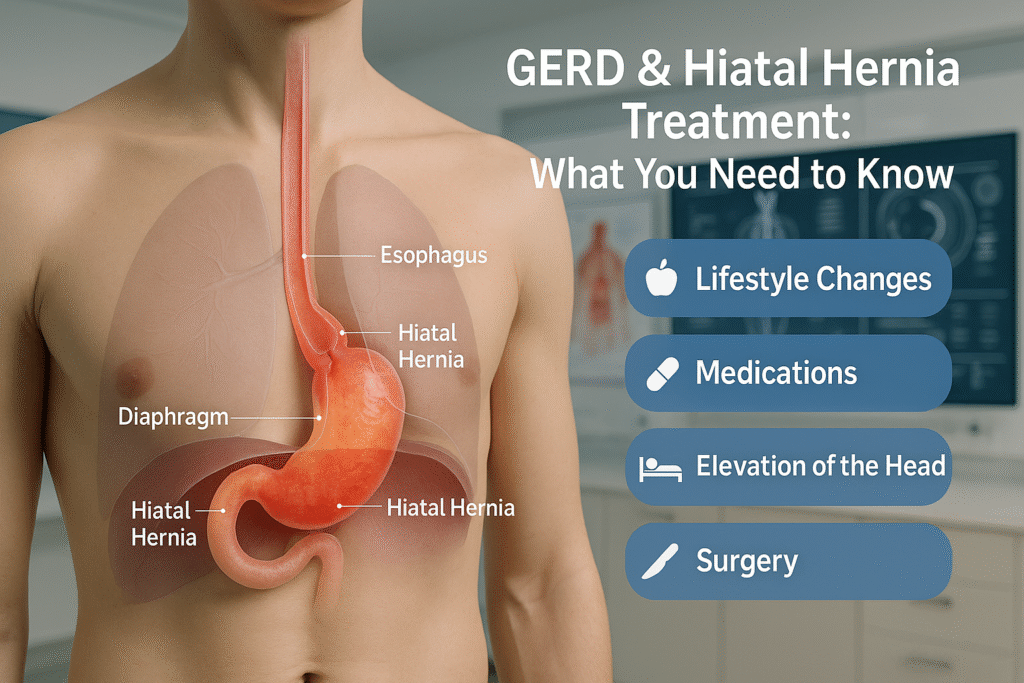
Chronic heartburn, acid reflux, and discomfort in the chest or upper abdomen may point to two related conditions: GERD (Gastroesophageal Reflux Disease) and Chronic heartburn, acid reflux, and discomfort in the chest or upper abdomen may point to two related conditions: GERD (Gastroesophageal Reflux Disease) and hiatal hernia. These often go hand-in-hand and can significantly impact your quality of life.
Understanding their causes, symptoms, and the full range of treatment options for GERD and hiatal hernia is the first step toward long-term relief. These often go hand-in-hand and can significantly impact your quality of life.
Understanding their causes, symptoms, and the full range of treatment options for GERD and hiatal hernia is the first step toward long-term relief.
What Is GERD?
GERD (Gastroesophageal Reflux Disease) is a chronic digestive disorder where stomach acid frequently flows back into the esophagus, causing irritation and inflammation. Unlike occasional heartburn, GERD symptoms can occur several times a week and often require medical attention.
Common Symptoms of GERD:
- Frequent heartburn
- Acid reflux (especially after meals or when lying down)
- Regurgitation of food or sour liquid
- Difficulty swallowing
- Chronic cough or sore throat
- Chest pain that mimics heart conditions
What Is a Hiatal Hernia?
A hiatal hernia occurs when the upper part of the stomach pushes through the diaphragm into the chest cavity. While some people have no symptoms, a hiatal hernia can often worsen GERD by weakening the valve (lower esophageal sphincter) that normally prevents acid from backing up.
Hiatal Hernia Symptoms:
- Heartburn or acid reflux
- Bloating and belching
- Chest discomfort
- Shortness of breath (in large hernias)
- Nausea or early fullness
The Link Between GERD and Hiatal Hernia
Many people with chronic acid reflux also have a hiatal hernia, which contributes to the severity of GERD. While the hernia doesn’t always cause symptoms on its own, it can allow acid to move more easily into the esophagus, leading to persistent reflux and damage over time.
That’s why proper diagnosis and targeted treatment are essential.
Diagnosis of GERD and Hiatal Hernia
A gastroenterologist may use several tests to confirm GERD or a hiatal hernia:
- Upper endoscopy: Examines the esophagus and stomach for signs of damage
- Barium swallow (esophagram): Shows the shape of the esophagus and stomach
- Esophageal pH monitoring: Measures acid levels in the esophagus
- Manometry: Tests esophageal muscle strength and coordination
GERD & Hiatal Hernia Treatment Options
Lifestyle Changes for GERD and Hernia Relief
For mild to moderate symptoms, non-surgical treatments can be highly effective:
- Eat smaller meals and avoid eating late at night
- Avoid trigger foods like caffeine, alcohol, spicy foods, chocolate, and citrus
- Elevate your head while sleeping (use a wedge pillow or adjust your bed)
- Maintain a healthy weight to reduce abdominal pressure
- Quit smoking, as it weakens the lower esophageal sphincter
- Wear loose-fitting clothes to reduce pressure on the abdomen
These lifestyle changes for GERD are often the first line of defense and can provide lasting acid reflux relief when consistently followed.
2. Medications for GERD Treatment
If lifestyle adjustments aren’t enough, medications may be prescribed:
- Antacids: For short-term symptom relief
- H2 blockers: Reduce acid production (e.g., ranitidine, famotidine)
- Proton pump inhibitors (PPIs): Block acid more effectively (e.g., omeprazole, pantoprazole)
- Prokinetics: Help strengthen the LES and improve gastric emptying
Always consult your physician for the right dosage and to avoid long-term side effects of acid suppression therapy.
3. Hiatal Hernia Surgery
When symptoms are severe, persistent, or not responding to conservative treatment, hiatal hernia surgery may be recommended. This is particularly common if GERD symptoms are not controlled by medication or the hernia is large.
The most common procedure is laparoscopic Nissen fundoplication, which:
- Repairs the hernia by pulling the stomach back into the abdomen
- Tightens the opening in the diaphragm
- Reinforces the lower esophageal sphincter to prevent acid reflux
Minimally invasive techniques often lead to faster recovery, less pain, and a reduced risk of complications.
Not everyone with a hiatal hernia needs surgery, but it can offer long-term relief for those with refractory GERD or large, symptomatic hernias.
What to Expect After Hiatal Hernia Repair
After surgery, patients typically follow a staged diet (liquids to soft foods) and gradually return to normal activity. Full recovery can take a few weeks. Most patients experience significant improvement in GERD symptoms and enjoy better quality of life.
Post-surgical guidelines usually include:
- Avoiding heavy lifting for 4–6 weeks
- Sticking to small, frequent meals
- Continuing heartburn-safe dietary habits
Final Thoughts: Choosing the Right GERD and Hiatal Hernia Treatment
If you’re dealing with persistent acid reflux or suspect a hiatal hernia, don’t ignore the symptoms. Long-term acid exposure can lead to serious complications, including esophagitis, Barrett’s esophagus, or even esophageal cancer.
The good news? With the right approach—ranging from simple lifestyle changes to GERD surgery—you can find lasting relief and restore your digestive health.
Need Personalized Advice or Treatment?
If you’re struggling with chronic GERD or suspect a hiatal hernia, don’t wait. Contact Us today to schedule a consultation with our digestive health specialists.


 Qubopro.com