
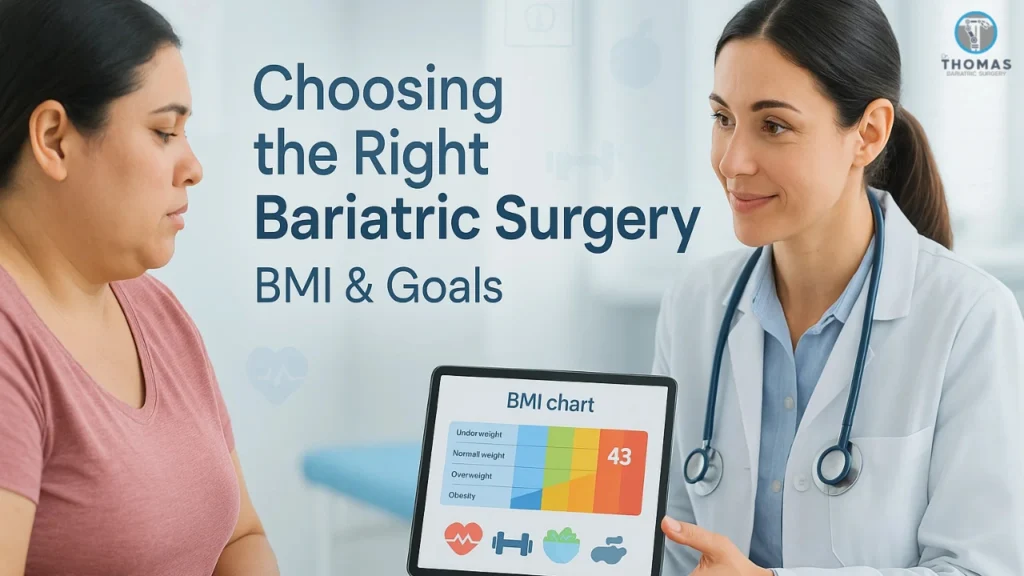
Choosing the right bariatric surgery procedure is essential for achieving long-term wellness, mobility, and confidence in your life. You need to know which weight loss procedure is right for you before you get one.
In this blog post, we’ll try to understand the key factors influencing bariatric surgery decisions for weight loss. After reading this article, you can make the right choice that truly supports your weight loss surgery with lasting results.
Understanding the Importance of Choosing the Right Bariatric Procedure
Every patient’s journey with obesity is unique. That means the right treatment for one person might not be ideal for another.
Choosing a bariatric surgery procedure totally depends on which fits your body’s needs, your health, and your lifestyle. Our qualified bariatric surgeons will guide you throughout every step and make your weight loss journey smooth with lasting results.
1. BMI and Bariatric Surgery: The Foundation of Your Eligibility
Your Body Mass Index (BMI) is the foundation that plays a huge role in finding which weight loss surgery options are right for you.
Here’s a general understanding:
- BMI 30–34.9: Surgeries are typically considered only if you’re going through serious co-morbidities (like diabetes or sleep apnea).
- BMI 35–39.9: You’re eligible if you’re going through one or more obesity-related problems.
- BMI 40 and above: Our specialists usually recommend surgery, even without any additional medical conditions.
However, BMI alone does not tell you the right choice. Our surgeons evaluate lots of factors like body composition, weight history, and health risks before recommending a specific approach.
2. Co-Morbidities: How Your Health Conditions Influence Your Choice
Before recommending any surgery, our bariatric surgeons first try to understand your health history. And if you’re going through any chronic conditions such as Type 2 diabetes, high blood pressure, heart disease, or sleep apnea. They chose the bariatric surgery procedure accordingly.
Different surgical effects based on the chronic diseases:
- Gastric Bypass (Roux-en-Y): Usually recommended for patients who’re suffering from Type 2 diabetes or severe reflux, as it tends to provide greater improvement in metabolic conditions.
- Sleeve Gastrectomy: Our specialist usually recommends this to patients who have fewer health complications. And to those who’re looking for a less complex procedure.
- Duodenal Switch: Typically reserved for patients with very high BMI or those requiring the greatest amount of weight loss.
Our surgeons usually recommend the best procedures that focus on health, safety, and long-term improvement.
3. Lifestyle Considerations: What Works for Your Daily Routine
Pre and post-surgery factors matter a lot while choosing the right surgery procedure. From your eating patterns to physical activity and follow-up commitments matter a lot. Our surgeons try to understand every single point for an effective long-term success rate.
When it comes to weight loss surgery lifestyle considerations, here are some key points:
- Gastric Bypass: If you’re going through the gastric bypass surgery. Then it requires lifelong vitamin supplementation and careful diet monitoring.
- Sleeve Gastrectomy: It usually offers fewer restrictions but still demands healthy eating with portion control.
- Adjustable Gastric Band (less common today): Needs regular adjustments and close follow-ups.
The bariatric procedure you choose depends on your lifestyle you carry daily. A daily routine helps in maintaining your weight loss journey better.
4. Personal Goals: Defining What Success Means to You
Every patient looks for a different outcome from bariatric surgery. Some patients want dramatic weight loss, but some want to increase their energy levels, mobility, and confidence.
Based on your goals, your weight loss options depend:
- If your main goal is to lose maximum weight, then gastric bypass or duodenal switch might be the ideal choice for you.
- If you prefer a simpler procedure with faster recovery, sleeve gastrectomy is often recommended.
- For those focused on reversing obesity-related diseases, bypass or sleeve procedures tend to offer strong metabolic benefits.
5. Comparing the Most Common Procedures: Gastric Bypass vs Sleeve Gastrectomy
When people research gastric bypass vs sleeve gastrectomy, they often want to know which one provides better results. The truth is, both work effectively but in different ways.
Feature | Gastric Bypass | Sleeve Gastrectomy |
Procedure Type | Reduces stomach size & reroutes intestines | Removes part of the stomach to form a sleeve |
Expected Weight Loss | 60–80% of excess weight | 50–70% of excess weight |
Improvement in Diabetes | Significant | Moderate to significant |
Long-Term Maintenance | Requires a strict diet, vitamins, and follow-ups | Easier to maintain but still disciplined |
Recovery Time | Slightly longer | Slightly shorter |
6. Emotional Readiness and Support System
Beyond physical health, emotional readiness is a vital bariatric surgery decision factor. Successful patients often have:
- Realistic expectations about surgery outcomes.
- A strong support system (family, friends, or support groups).
- Willingness to adopt permanent lifestyle changes.
Surgery transforms your relationship with food, your body, and your confidence — preparation and emotional stability help ensure you’re ready for lasting change.
Conclusion: The Best Weight Loss Surgery for You is the One That Fits You
When it comes to choosing a bariatric surgery procedure, there’s no universal “best.” The right choice depends on your BMI, co-morbidities, lifestyle, and goals.
A conversation with an experienced bariatric surgeon can help you understand the risks, benefits, and realistic expectations of each option. With expert guidance and a strong commitment to change, bariatric surgery can help you reclaim your health, confidence, and quality of life.
Ready to take the first step?
Schedule your consultation with the Thomas Bariatrics team today and discover which weight loss surgery option is right for you.
About the Author

Dr. David Thomas
Bariatric Surgeon
Dr. Thomas, a skilled bariatric surgeon at Methodist Hospital Landmark Bariatrics and Weight Loss Center, treats obesity, GERD, hernias, and more with patient-focused care. Rated 4.9/5, he’s board-certified, a Fellow of ACS and ASMBS, and serves as Medical Director of the bariatric program. His multilingual staff ensures inclusive care, accepts most insurance plans, and welcomes new patients seeking expert surgical solutions for lasting health and wellness.

 Qubopro.com