
Why the Definition of Obesity Has Changed
Why is the medical world suddenly calling obesity a chronic disease? And what does it mean for someone who’s been trying to lose weight for years without lasting success?
For decades, people were told that weight gain was simply the result of poor choices — “eat less, move more.” But today’s research paints a very different picture. Scientists now understand that metabolic disease and obesity are deeply connected to biology, hormones, genetics, environment, and long-term metabolic pathways. In other words, obesity isn’t a temporary issue someone can fix with motivation alone — it behaves like a long-lasting medical condition.
This shift has changed everything, from how doctors diagnose obesity to how they treat it. New science has pushed forward modern obesity therapies, including medications, surgery, metabolic interventions, and long-term care models that finally address the real causes of obesity.
If you’ve ever wondered why standard diets fail or why weight returns even after doing “everything right,” the answer lies in understanding obesity as a chronic disease — and how today’s treatments are evolving to match the science.
And if you’re looking for personalized, medically guided weight loss, Thomas Bariatrics specializes in helping patients manage obesity with the most advanced and effective treatment options available today.
Understanding the Chronic Disease Obesity Model
What Makes a Condition a “Chronic Disease”?
A chronic disease isn’t defined by willpower — it’s defined by biology. Chronic conditions last a long time, have multiple internal drivers, and require ongoing management instead of short-term fixes. Obesity fits this definition perfectly, based on what modern medical research shows.
Why Obesity Fits the Chronic Disease Framework
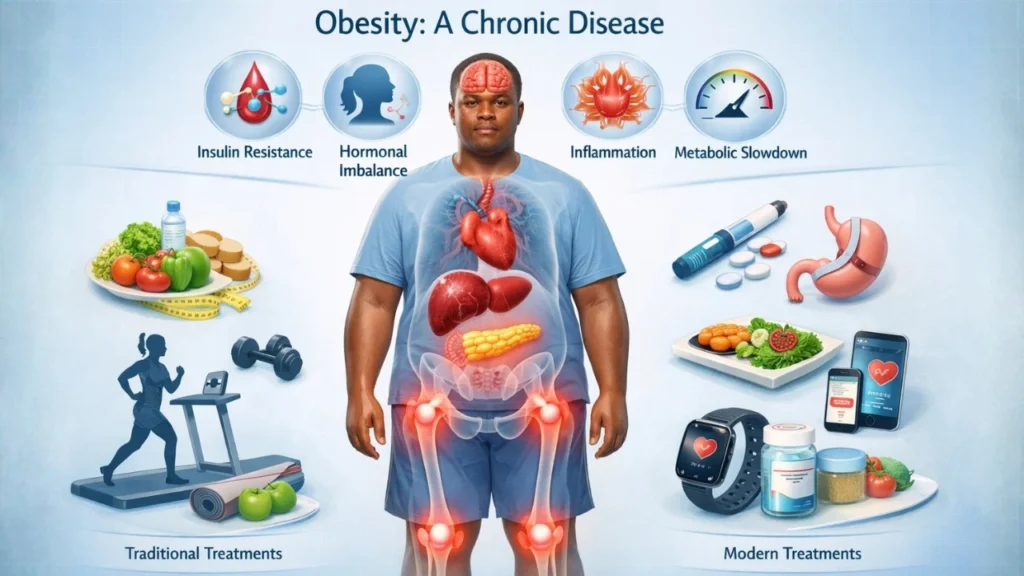
When doctors talk about the chronic disease obesity model, they refer to the internal changes that keep the body at a higher weight regardless of diet or exercise. These changes include disrupted metabolic pathways, hormonal imbalance, increased insulin resistance, and the body’s built-in “set point” that resists long-term weight loss.
Organizations like the WHO, Cleveland Clinic, and the Obesity Medicine Association now support this model because the evidence is undeniable: obesity behaves like other chronic conditions — persistent, complex, and influenced by long-term biology.
The Real Causes of Obesity: Beyond “Eat Less, Move More”
Biological & Metabolic Factors
Obesity is influenced by genetics, metabolism, and appetite-regulating hormones like GLP-1, ghrelin, and leptin. When these systems malfunction, the body naturally stores more fat and increases hunger signals, making weight loss much harder.
These biological drivers explain why metabolic disease and obesity often come hand in hand.
Environmental & Lifestyle Factors
Ultraprocessed foods, sedentary jobs, chronic stress, poor sleep, and certain medications also contribute to weight gain. These factors add fuel to an already complex biological system.
Why Obesity Is Not Simply a Lifestyle Failure
The biggest misconception is that obesity is purely caused by lifestyle choices. Science shows otherwise. The causes of obesity are layered and chronic, which is why it continues to be recognized as a long-term medical condition rather than a simple behavior issue.
How Treatment for Obesity Is Evolving
The Shift From Short-Term Dieting to Long-Term Weight Management
Most diets fail because they treat obesity as a temporary problem. But the body adapts — slowing metabolism, increasing hunger, and restoring lost weight. That’s why real success comes from long-term weight management, which focuses on gradual, sustainable changes backed by medical guidance.
Lifestyle Changes: Still Essential, But Not Enough Alone
Lifestyle habits still matter — nutrition, daily movement, and behavioral support all play an important role. But research shows that lifestyle alone rarely produces significant or lasting weight loss for people living with obesity as a chronic disease. This is where medical treatment becomes essential.
Today’s approach focuses on lifestyle vs. medical treatment — emphasizing that both are needed, but medical options make long-term success far more achievable.
Modern Obesity Therapies: What Science Now Recommends
Medications and GLP-1 Therapies
One of the biggest breakthroughs in recent years has been GLP-1 medications for obesity, such as Wegovy and Zepbound. These medications regulate appetite, reduce cravings, improve insulin response, and support long-term fat loss.
They work with the body’s hormones rather than fighting against them, making them a core part of modern obesity therapies. GLP-1 medications also align closely with the chronic disease obesity model, proving that obesity responds best to evidence-based medical treatment.
Combination Therapies
The most effective approach blends multiple strategies: medication, nutrition guidance, strength training, behavioral support, and modern digital tracking tools. When combined, these therapies boost metabolism, improve hormone balance, and help patients maintain results.
Metabolic & Bariatric Surgery
For individuals with severe obesity or metabolic complications, bariatric surgery offers one of the most reliable long-term outcomes. Surgery changes hunger hormones, improves insulin sensitivity, and often reduces the risk of obesity-related diseases.
At Thomas Bariatrics, patients receive a full medical evaluation and guidance to choose a treatment plan aligned with the latest standards in obesity care.
Updated Obesity Guidelines and Clinical Standards
What Major Health Organizations Say
The WHO, CDC, American Medical Association, and the Obesity Medicine Association all agree: obesity is a chronic, treatable disease. Their obesity guidelines and standards emphasize long-term care, early medical intervention, and the use of medications and surgery as appropriate.
Why Guidelines Now Recommend Early Medical Intervention
Early treatment reduces complications, prevents metabolic decline, and improves long-term quality of life. The earlier obesity is addressed, the easier it is to manage.
Insurance & Medical Coverage Shifts
As obesity is increasingly recognized as a chronic condition, insurance providers have started expanding coverage for medications, surgery, and medical weight management programs.
How the Chronic Disease Approach Improves Patient Outcomes
Better Long-Term Success Rates
When obesity is treated like other chronic conditions, patients finally see lasting progress. Medical support removes the pressure of relying solely on willpower and replaces it with science-backed tools.
Reduced Risk of Obesity-Related Chronic Diseases
Treating obesity early and effectively can reduce the risk of heart disease, diabetes, fatty liver disease, sleep apnea, and other long-term complications.
Destigmatizing Obesity
Recognizing obesity as a chronic disease helps remove shame and blame. It encourages more people to seek treatment and empowers them to understand that their struggle is medical — not personal.
The Future of Obesity Treatment
The next wave of obesity treatment evolution is already underway. New dual-agonist and triple-agonist medications show even greater results. Continuous metabolic monitoring will help patients understand hunger patterns, insulin responses, and gut health. Digital platforms and AI-driven weight management tools will make long-term care easier and more personalized.
At Thomas Bariatrics, these advancements are already shaping the next generation of patient care.
When Should Someone Seek Treatment?
If weight is affecting your energy, confidence, mobility, or overall health, it may be time to seek help. Early treatment leads to better outcomes and gives the body the support it needs for long-term success.
If you’re unsure which treatment you qualify for, Thomas Bariatrics provides personalized evaluations to help you understand your options — from lifestyle planning to medication to surgical care.
Conclusion: Obesity Is a Chronic, Treatable Medical Condition
Today, we know that obesity as a chronic disease is real — driven by biology, shaped by environment, and responsive to modern medical treatment. The science is clear: you don’t have to fight this alone, and you’re not supposed to rely only on willpower.
The future of obesity care is here, and with the right tools and medical support, long-term success is absolutely possible.
Ready to take the next step toward lasting change?
Schedule a consultation with Thomas Bariatrics today and start your personalized path to better health.


 Qubopro.com