
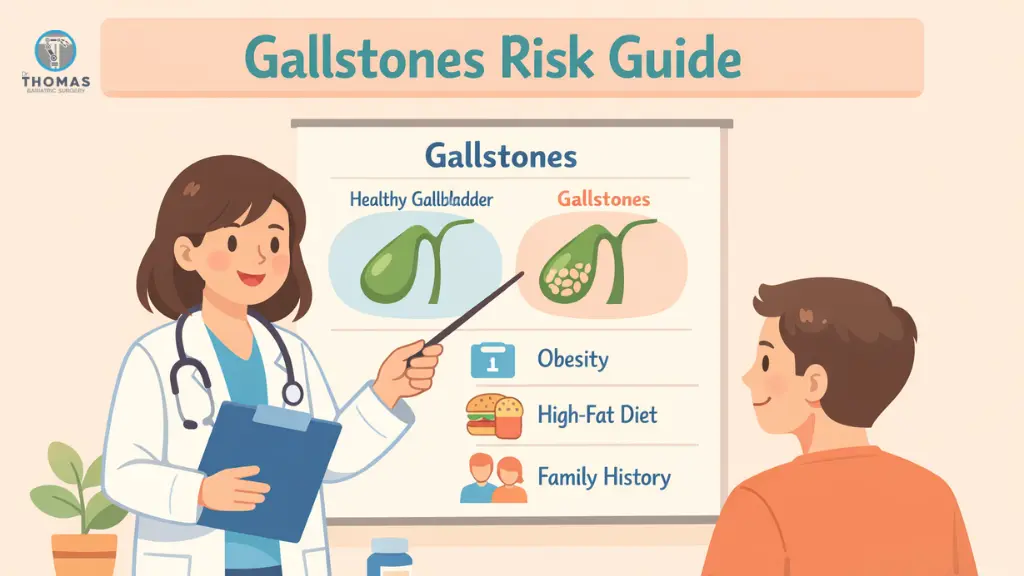
Yes—rapid weight loss, the risk can increase when weight drops too quickly. This is one of the better-known complications of aggressive dieting, very-low-calorie plans, and some types of bariatric surgery. Research and major medical sources both support the link: fast weight loss can make bile more concentrated with cholesterol and can also reduce how well the gallbladder empties, which creates a setting where stones are more likely to form.
Why does fast weight loss raise the risk of gallstones?
Gallstones often form when bile contains more cholesterol than it can dissolve. During rapid weight loss, the liver may release extra cholesterol into bile, and the gallbladder may not empty as regularly as it should. That combination can increase stone formation. A PubMed review notes that weight loss and gallstones are closely linked when weight is lost too quickly, especially with extreme calorie restriction, long fasting periods, or very low-fat diets.
A large 2024 population-based study in Scientific Reports also found that long-term weight change patterns—including major weight loss—were associated with higher gallstone risk. In that study, people with more than 20% weight loss had the highest adjusted risk among the weight-loss groups.
So, can dieting cause gallstones?
It can, especially when dieting is extreme. That does not mean healthy weight loss is bad. The issue is usually the speed and method of weight loss—not weight loss itself.
According to Mayo Clinic, losing weight very quickly is a risk factor for gallstones, and they recommend aiming for about 1 to 2 pounds per week. They also note that skipping meals or fasting can increase gallstone risk.
That means, whether dieting can cause gallstones is really the wrong question in isolation. A better question is: what kind of diet, how restrictive is it, and how quickly is the person losing weight?
Who is more likely to develop gallstones after weight loss?
The risk is higher in people who already have some gallstone risk factors, including being overweight or obese, being female, being older, being sedentary, having diabetes, or eating a low-fiber diet. Mayo Clinic also lists rapid weight loss as a specific risk factor.
The PubMed review adds several risk patterns seen during weight reduction:
- losing more than 24% of starting body weight
- losing weight faster than 1.5 kg per week
- following a very-low-calorie, no-fat diet
- going for long overnight fasts
- having high triglyceride levels
This helps explain why gallstones from losing weight fast are more common with crash diets than with steady, balanced programs.
How common are gallstones after weight loss?
Older review data cited in PubMed found that new gallstones developed in about 10% to 12% of people after 8 to 16 weeks of a low-calorie diet, and in more than 30% within 12 to 18 months after gastric bypass surgery. About one-third of those stones were symptomatic.
Those numbers can vary depending on the population and the type of weight-loss approach, but the broader point is clear: gallstones after weight loss are not rare when weight is lost rapidly.
What symptoms should people watch for?
Many gallstones cause no symptoms at all. But when a stone blocks a duct, symptoms can become noticeable and painful. Mayo Clinic lists these common signs:
- Suddenly, intensifying pain in the upper right abdomen
- pain in the center of the abdomen below the breastbone
- back pain between the shoulder blades
- right shoulder pain
- nausea or vomiting
These symptoms may last from several minutes to a few hours.
When should you see a doctor?
Make a medical appointment if symptoms keep returning or concern you. Seek urgent care right away if you have severe abdominal pain that makes it hard to sit still, jaundice, or a high fever with chills, because those can point to a serious gallstone complication.
Can you lower the risk while trying to lose weight?
Yes. The goal is safer, steadier fat loss rather than extreme restriction. Based on the sources you shared, these steps may help lower risk:
1. Lose weight gradually
Mayo Clinic recommends losing about 1 to 2 pounds per week instead of pushing for fast drops.
2. Avoid crash diets
Very-low-calorie, no-fat plans are linked with more gallstone formation during weight loss.
3. Do not skip meals
Long fasting periods and skipped meals may increase gallstone risk.
4. Include some healthy fat in the diet
The PubMed review notes that keeping a small amount of fat in the diet may help support gallbladder emptying during weight loss.
5. Stay physically active
The 2024 Scientific Reports study found that regular physical activity reduced gallstone risk in people with weight changes, bringing risk closer to that of people who maintained their weight.
6. Ask about prevention if weight loss will be rapid
In some higher-risk settings, such as after bariatric surgery, clinicians may discuss preventive strategies. The PubMed review notes that ursodeoxycholic acid reduced gallstone incidence during weight loss, though whether it is appropriate depends on the patient and clinician guidance.
Is weight loss still worth it if gallstones are a risk?
Usually, yes—when done safely. Obesity itself is also associated with gallstones, so remaining at an unhealthy weight is not a great alternative. The smarter path is a medically guided, balanced approach that avoids the extremes most associated with rapid weight loss side effects, including gallstones.
Final takeaway
Rapid weight loss and gallstones are a real concern, especially with crash dieting, very-low-calorie plans, fasting, or major post-surgical weight loss. The evidence suggests that weight loss and gallstones are connected when the body loses weight too fast. If you are trying to slim down, the safest strategy is gradual weight loss, regular meals, physical activity, and medical guidance when needed. That can help reduce the chance of gallstones from losing weight fast while still supporting long-term health.
Ready to take the next step toward lasting change?
Schedule a consultation with Thomas Bariatrics today and start your personalized path to better health.
Medical Disclaimer:
This content is for informational purposes only and does not constitute medical advice, diagnosis, or treatment. Always consult a qualified healthcare provider regarding any medical condition or treatment decisions. Individual results may vary.


 Qubopro.com