
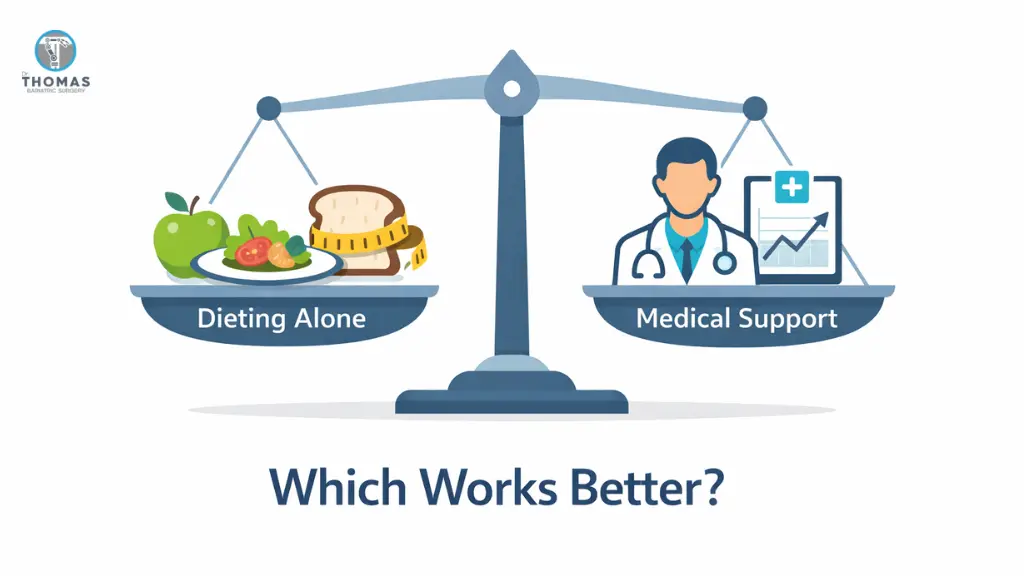
When people want to lose weight, they often start with a popular diet, a calorie-cutting plan, or a new workout routine. Sometimes that works for a while. But many people eventually hit a plateau, feel discouraged, or regain the weight they lost. That is where medically supervised weight loss enters the conversation.
So, which works better long term: a medical weight loss program or dieting alone?
In many cases, dieting by yourself can help with short-term weight loss, but a doctor-supervised weight loss approach is usually more effective for people who want safer, more personalized, and more sustainable results. Structured programs tend to work better over time because they combine nutrition, behavior change, accountability, and ongoing adjustments rather than relying on willpower alone.
What Is Medically Supervised Weight Loss?
Medically supervised weight loss is a physician-led approach to weight management that is tailored to the patient’s body, health history, lifestyle, and weight-loss challenges. These programs typically begin with a medical evaluation and may include nutrition planning, exercise guidance, behavior support, progress monitoring, and sometimes medication when medically appropriate. Clinic sources describe these programs as personalized and designed for long-term follow-through rather than quick, one-size-fits-all fixes.
A physician-supervised weight loss plan may also look at factors that standard dieting often ignores, such as hormonal imbalance, metabolism, thyroid issues, diabetes risk, stress, emotional eating, or digestive and liver health.
What Does Dieting Alone Usually Involve?
Dieting alone often means choosing a plan without medical guidance. That could be low-carb, low-fat, intermittent fasting, meal replacement shakes, or simply trying to eat less and exercise more.
The problem is that dieting alone is often generic. It may not account for why someone is gaining weight, why they struggle with hunger, or why they keep regaining lost pounds. One reference source contrasts dieting alone with medical programs by noting that dieting often lacks medical evaluation, can be harder to maintain, and may produce results that do not last.
That does not mean dieting is useless. For some people, improving food choices and increasing activity can absolutely lead to success. But long-term weight management is usually harder when there is no expert support, no plan adjustment, and no system for handling setbacks.
Why Long-Term Results Matter More Than Fast Results
A lot of people focus on how much weight they can lose in a few weeks. But the real question is whether they can keep it off.
A systematic review and meta-analysis found that combined behavioral weight management programs produced more weight loss at 12 months than diet-only programs. The same review also found that combined programs outperformed physical activity-only plans in both the short and long term. In other words, more complete and structured approaches tend to hold up better over time than a single strategy alone.
That matters because many people who try to lose weight on their own fall into a cycle of strict dieting, temporary success, frustration, and regain. Some reference articles also note that dieting alone may focus too narrowly on calorie restriction, while professionally guided programs tend to address behavior, metabolism, and consistency.
Medical Weight Loss vs Dieting: Key Differences
Here is where medical weight loss vs dieting becomes easier to understand.
1. Personalization
A medical weight loss program is built around the individual. Doctors may consider metabolic rate, health conditions, medications, hormones, and lifestyle patterns before creating a plan. Dieting alone usually starts with a generic set of rules pulled from the internet, social media, or a trend-driven plan.
2. Ongoing Monitoring
One major advantage of doctor-supervised weight loss is regular follow-up. Medical sources emphasize that check-ins allow the plan to be adjusted as needed, which can help patients stay motivated and avoid feeling stuck. Dieting alone does not usually include that kind of built-in accountability.
3. Addressing Root Causes
A physician-supervised weight loss plan may identify issues like insulin resistance, thyroid problems, emotional eating, poor sleep, or obesity-related medical conditions. Dieting alone usually treats weight as a simple calorie problem, even when the picture is more complicated.
4. Sustainability
Reference sources consistently frame medical programs as more supportive of long-term change. They emphasize gradual progress, realistic goals, and long-term monitoring, while dieting alone is often described as harder to maintain and more likely to end in regain.
Who Benefits Most From a Long-Term Weight Loss Program?
A long-term weight loss program may be especially helpful for people who:
- have tried multiple diets and regained the weight
- have obesity-related conditions such as diabetes, PCOS, or high blood pressure
- Suspect hormonal or metabolic issues.
- struggle with cravings, emotional eating, or inconsistent results
- want professional guidance instead of guesswork
Medical sources specifically note that medically guided programs can be useful for people with repeated diet failure, health conditions affecting weight, or a desire for safer and more structured results.
Is Dieting Alone Ever Enough?
Yes, for some people.
If someone has a modest amount of weight to lose, no major medical barriers, and can stick with healthy habits consistently, dieting and exercise alone may work well. But even then, success usually depends on realistic habits rather than extreme restriction.
The issue is not that dieting never works. It often works temporarily. Long-term success usually depends on support, behavior change, routine, and a plan that can adapt over time.
Which Works Better Long Term?
For long-term outcomes, medically supervised weight loss usually has the edge over dieting alone.
That does not mean every person needs medication or a clinical program. It means that people generally do better when weight loss is approached as a structured process instead of a short burst of self-discipline. The strongest takeaway from the evidence and reference materials is that comprehensive, monitored, multi-component approaches are better suited for lasting success than single-focus dieting strategies.
Final Thoughts
If your goal is not just to lose weight but to keep it off, medically supervised weight loss is often the smarter long-term option. A medical weight loss program can provide personalized care, identify barriers, track your progress, and help you make changes that actually fit your body and lifestyle.
Dieting alone may help you start, but a doctor-supervised weight loss plan is more likely to help you stay the course. For people who have struggled with repeated failures, plateaus, or weight regain, a physician-supervised weight loss approach may offer the structure and support needed for real, lasting change.
Ready to take the next step toward lasting change?
Schedule a consultation with Thomas Bariatrics today and start your personalized path to better health.
Medical Disclaimer:
This content is for informational purposes only and does not constitute medical advice, diagnosis, or treatment. Always consult a qualified healthcare provider regarding any medical condition or treatment decisions. Individual results may vary.


 Qubopro.com