
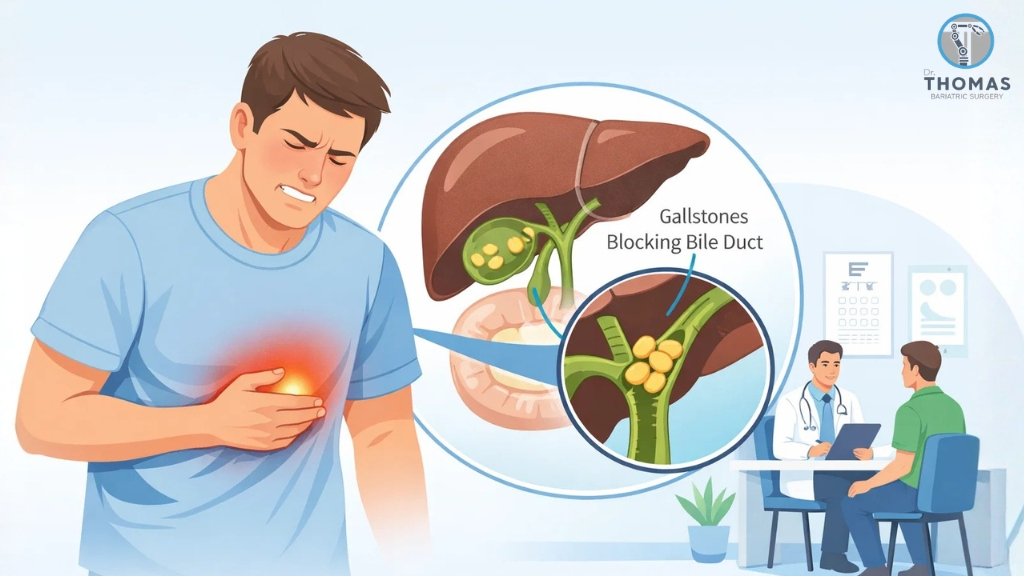
A gallbladder attack can start suddenly and feel much worse than ordinary stomach discomfort. In many cases, it happens when a gallstone blocks a bile duct, causing bile to back up and trigger pain, pressure, and inflammation. These attacks often cause pain in the upper right abdomen, may follow a heavy or fatty meal, and can last from several minutes to a few hours.
For anyone searching for gallbladder attack symptoms, the most important thing to know is this: some attacks pass, but others turn into a medical emergency. If symptoms are severe, last for hours, or come with fever, jaundice, or vomiting, you should not wait it out at home.
What does a gallbladder attack feel like?
Typical symptoms of a gallbladder attack usually center around sudden pain in the upper right side of the abdomen. That pain may also be felt in the middle upper abdomen, between the shoulder blades, or in the right shoulder. Some people describe it as sharp, cramping, or intense pressure that builds quickly and becomes hard to ignore. Nausea and vomiting are also common.
These gallbladder pain symptoms often begin after eating, especially after a rich, greasy, or heavy meal, because the gallbladder squeezes to release bile for digestion. Attacks are also commonly reported in the evening or at night.
Common signs you should not ignore
Some of the most common signs of gallstones or a gallbladder attack include:
- Sudden pain in the upper right abdomen
- Pain in the center of the abdomen, just below the breastbone
- Pain that spreads to the back or right shoulder
- Nausea or vomiting
- Bloating or abdominal tenderness
- Pain lasting several minutes to a few hours
It is also worth knowing that many gallstones cause no symptoms at all. These are sometimes called silent gallstones. Trouble usually starts when a stone blocks a duct and causes pressure, inflammation, or infection.
When to seek treatment right away
This is where emergency gallbladder symptoms matter most. According to NIDDK and Mayo Clinic, you should seek immediate medical care if you have gallbladder-type pain along with any of the following:
- Abdominal pain lasting several hours
- Pain so severe that you cannot sit still or get comfortable.
- Fever or chills
- Yellowing of the skin or eyes
- Nausea and vomiting that do not settle
- Tea-colored urine
- Light-colored stools
If you are wondering when to go to the ER for gallbladder pain, the answer is: go right away when the pain is intense, persistent, or paired with fever, chills, jaundice, or vomiting. These symptoms can point to a blocked bile duct, acute gallbladder inflammation, infection, or complications involving the liver or pancreas. NIDDK notes that untreated bile duct or pancreatic duct blockages can become life-threatening.
Cleveland Clinic also notes that severe upper right abdominal pain with nausea may be a reason to head straight to the ER, especially when it feels sudden and intense.
Why fast treatment matters
A painful gallbladder attack is not always “just a bad stomach ache.” When a gallstone stays stuck, the gallbladder can become inflamed, a condition known as cholecystitis. Acute cholecystitis may cause severe pain, fever, tenderness, and ongoing digestive symptoms, and it often needs prompt treatment.
Even if the pain eases on its own, that does not always mean the problem is gone. A stone may temporarily move, but future attacks can happen again. Cleveland Clinic explains that once gallstones have caused acute gallbladder inflammation, repeat episodes are likely, and repeated inflammation can lead to ongoing damage.
Symptoms that may seem confusing
Some gallbladder attack symptoms can overlap with other serious conditions. NIDDK notes that gallstone symptoms can resemble appendicitis, ulcers, pancreatitis, or acid reflux. Cleveland Clinic adds that severe gallbladder pain can even be mistaken for chest pain or a heart attack.
That is one reason it is risky to self-diagnose. If your pain is severe, unusual, or paired with vomiting, fever, or yellowing of the skin, it is safer to get checked promptly rather than assume it is indigestion.
What happens at the hospital or urgent evaluation?
When you seek care for suspected gallbladder trouble, a provider will usually ask about the location, timing, and severity of your pain. They may examine your abdomen and order imaging tests and blood work to look for gallstones, inflammation, infection, or blockage. Cleveland Clinic specifically notes that evaluation may include imaging of the gallbladder and bile ducts, along with blood tests.
Treatment depends on what is causing the attack. Inflammation or gallstone complications may require pain control, fluids, antibiotics in some cases, and sometimes surgery to remove the gallbladder. Mayo Clinic notes that people with symptomatic gallstones often end up needing gallbladder removal, while silent gallstones usually do not need treatment.
A practical rule to remember
Here is a simple way to think about it:
If the pain is mild and brief, call your doctor soon. If the pain is severe, lasts more than a few hours, or comes with fever, chills, jaundice, vomiting, dark urine, or pale stools, seek emergency care right away. Those are not symptoms to watch for “one more day.”
Final thoughts
Recognizing gallbladder attack symptoms early can help you get the right care before complications develop. Watch for upper right abdominal pain, nausea, vomiting, pain after heavy meals, and discomfort that spreads to the back or right shoulder. Most importantly, do not ignore emergency gallbladder symptoms such as persistent severe pain, fever, chills, jaundice, or changes in urine and stool color.
Ready to take the next step toward lasting change?
Schedule a consultation with Thomas Bariatrics today and start your personalized path to better health.
Medical Disclaimer:
This content is for informational purposes only and does not constitute medical advice, diagnosis, or treatment. Always consult a qualified healthcare provider regarding any medical condition or treatment decisions. Individual results may vary.


 Qubopro.com