
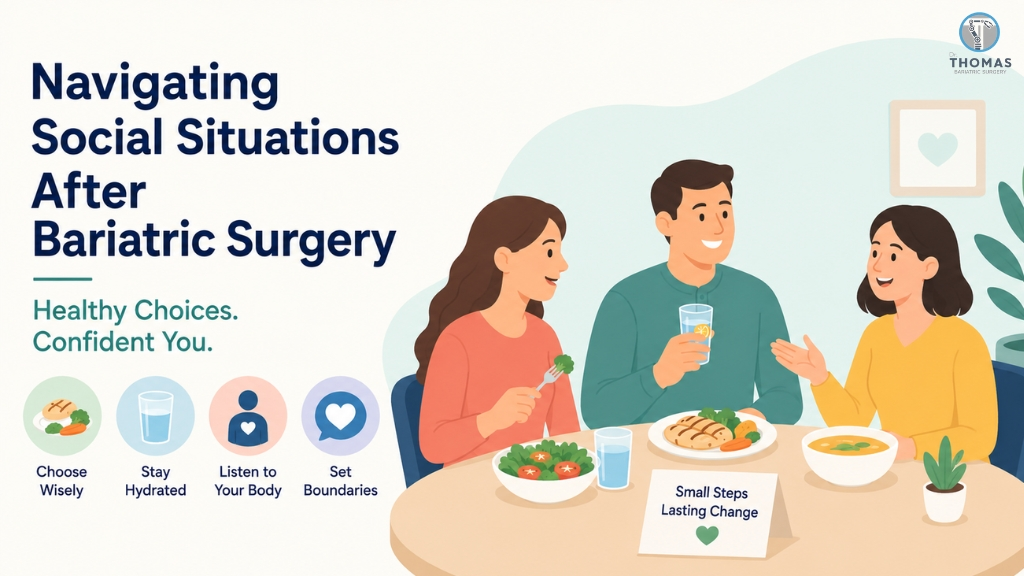
Life after bariatric surgery is not just about what you eat at home. It is also about how you handle birthday dinners, family gatherings, office lunches, holidays, weddings, vacations, and nights out with friends. For many patients, the social side of bariatric surgery recovery can feel just as challenging as the physical side.
Whether you had gastric sleeve surgery, gastric bypass surgery, or another weight loss surgery procedure, your relationship with food, portions, alcohol, and social pressure will likely change. That does not mean your social life has to disappear. It simply means you need a new strategy.
This guide explains how to navigate social situations after bariatric surgery with confidence, comfort, and realistic expectations.
Why Social Situations Feel Different After Bariatric Surgery
After bariatric surgery, your stomach capacity is smaller, your eating pace changes, and your body may respond differently to certain foods and drinks. Many patients are advised to eat small meals, chew food well, avoid high-sugar or high-fat foods, prioritize protein, and take vitamins or supplements as directed by their care team.
Because food is such a big part of social life, these changes can feel awkward at first. You may worry about people asking why you are eating less, why you are avoiding alcohol, or why you are not eating dessert.
The good news: with planning, boundaries, and practice, you can enjoy social events after bariatric surgery without feeling isolated.
1. Prepare Before the Event
One of the best ways to feel confident after weight loss surgery is to plan before you go. Social events become easier when you are not making every food decision under pressure.
Before attending a restaurant, party, or family gathering, consider:
- Looking at the menu online
- Choosing a protein-focused option in advance
- Asking if smaller portions are available
- Bringing a bariatric-friendly snack if appropriate
- Eating a small protein-rich meal before the event
- Carrying water, if allowed
- Avoiding situations where you arrive extremely hungry
This matters because many bariatric patients are advised to focus on lean, protein-rich foods and avoid foods or drinks that are high in fat and sugar.
Planning does not make you difficult. It makes you prepared.
2. Learn How to Eat Out After Bariatric Surgery
Eating out after bariatric surgery is possible, but it requires a different mindset. Instead of focusing on getting a full restaurant meal, focus on choosing foods that match your post-surgery diet plan.
Good restaurant choices may include:
- Grilled chicken
- Fish or seafood
- Turkey burger without the bun
- Eggs or omelets
- Soup with protein
- Greek yogurt-based options
- Soft cooked vegetables
- Small portions of lean protein
Foods that may be harder to tolerate after bariatric surgery include fried foods, sugary desserts, carbonated drinks, large portions, dry meats, bread-heavy meals, and high-fat sauces. Tolerance varies by person, so your bariatric dietitian’s guidance should come first.
A simple restaurant strategy is to order an appetizer, split a meal, ask for a to-go box early, or request sauces and dressings on the side. This helps with portion control after bariatric surgery without making the meal feel uncomfortable.
3. Practice a Simple Response to Food Questions
People may notice that you are eating less. Some may ask innocent questions. Others may make comments that feel uncomfortable.
You do not owe anyone your full medical history.
Try simple responses like:
- “I’m focusing on smaller portions right now.”
- “I’m following a medical nutrition plan.”
- “I’m eating slowly and listening to my body.”
- “I’m good, thank you.”
- “That looks great, but I’m full.”
If you are comfortable sharing, you can say, “I had bariatric surgery, so I’m adjusting how I eat.” But that is your choice.
A key part of life after bariatric surgery is learning that boundaries are not rude. They are protective.
4. Handle Alcohol Carefully
Alcohol can be a sensitive topic in social situations after bariatric surgery. Many patients feel pressure to drink at weddings, parties, networking events, or dinners.
However, alcohol may affect bariatric patients differently after surgery. The American Society for Metabolic and Bariatric Surgery explains that alcohol can be absorbed more quickly after bariatric surgery, and patients may have higher alcohol levels for a longer period compared with before surgery.
Mayo Clinic’s gastric bypass diet guidance also recommends avoiding alcohol after surgery.
Practical alternatives include:
- Sparkling-free mocktails
- Water with lemon
- Unsweetened iced tea
- Protein-friendly beverages approved by your care team
- Holding a drink without actually drinking alcohol
A simple response can be: “I’m not drinking tonight” or “I’m avoiding alcohol for health reasons.” No long explanation needed.
5. Manage Family Pressure With Calm Boundaries
Family gatherings can be tricky because loved ones may connect food with care. Someone may say, “Just have one bite,” “You used to love this,” or “I made it for you.”
This can feel emotional, especially during holidays or cultural celebrations.
Try saying:
- “I really appreciate it, but I can’t eat much right now.”
- “It looks amazing. I’m going to take a small portion.”
- “I’m following my post-surgery plan carefully.”
- “Please don’t take it personally. I’m doing this for my health.”
If needed, talk to close family members before the event. Explain that your post bariatric surgery diet is part of your medical care, not a rejection of their food.
6. Watch for Emotional Eating Triggers
Social events can bring emotional triggers. Stress, embarrassment, comments about your body, or feeling left out may create the urge to eat when you are not physically hungry.
This is why emotional support matters after weight loss surgery. Long-term bariatric success often includes attention to nutrition, behavior, lifestyle, and medical follow-up. Mayo Clinic notes that long-term follow-up may include tracking nutrition, lifestyle, behavior, and medical conditions.
Helpful coping tools include:
- Stepping outside for a few minutes
- Calling a supportive friend
- Practicing slow breathing
- Sitting away from snack tables
- Keeping your hands busy
- Reminding yourself why you started
- Working with a therapist or bariatric support group
If social eating feels overwhelming, it may be helpful to speak with a bariatric counselor, dietitian, or support team.
7. Do Not Make the Event Only About Food
After bariatric surgery, it helps to shift the focus of social events away from eating. Instead of centering every plan around restaurants or buffets, suggest activities that support your new lifestyle.
Ideas include:
- Walking with a friend
- Going to a movie
- Visiting a museum
- Playing games
- Attending a fitness-friendly event
- Hosting a coffee or tea meetup
- Planning an outdoor activity
- Choosing restaurants with healthier options
This helps you stay socially connected while protecting your bariatric weight loss journey.
8. Build a Support System
Support makes a huge difference during life after weight loss surgery. Some people will understand your journey immediately. Others may need time.
Your support system may include:
- Bariatric surgeon
- Registered dietitian
- Primary care doctor
- Therapist or counselor
- Support group
- Friends who respect your boundaries
- Family members who understand your goals
- Online bariatric community
The NIDDK explains that the best weight loss surgery option depends on multiple factors and should be discussed with a doctor, while bariatric surgery may also require follow-up care for side effects or complications.
The right support system helps you stay accountable without feeling alone.
9. Be Patient With Your New Normal
The first few months after bariatric surgery can feel especially different. Your diet may progress from liquids to soft foods and then to solid foods over time, depending on your care team’s instructions. NIDDK notes that patients are often started on liquids after surgery and gradually move toward soft foods and then solid foods.
That means social situations may be harder at first but easier with time.
You may need to learn:
- Which foods you tolerate
- How slowly you need to eat
- How much food feels comfortable
- How to explain your boundaries
- How to avoid overeating in public
- How to enjoy events without focusing on food
Progress after bariatric surgery is not only measured on the scale. It is also measured by confidence, consistency, better habits, and improved quality of life.
Bariatric-Friendly Tips for Common Social Situations
Restaurants
Review the menu first, choose protein, avoid fried foods, eat slowly, and stop when full.
Weddings
Eat a small protein-based meal beforehand, avoid grazing, and be cautious with alcohol.
Holidays
Bring a bariatric-friendly dish, take small portions, and set boundaries with family.
Work Lunches
Choose simple meals like grilled protein, soup, salad with protein, or eggs when available.
Travel
Pack approved snacks, stay hydrated, research restaurants, and keep supplements organized.
Parties
Stand away from the snack table, hold a drink you are comfortable with, and focus on conversations.
Final Thoughts
Navigating social situations after bariatric surgery takes practice, but it gets easier. You can still enjoy restaurants, holidays, parties, and family events after gastric sleeve, gastric bypass, or another bariatric procedure. The key is preparation, portion control, clear boundaries, and support.
Remember, bariatric surgery is not just a physical change. It is a lifestyle change. Social confidence grows when you learn how to protect your health without apologizing for it.
Follow your bariatric surgeon’s and dietitian’s advice, listen to your body, and give yourself permission to build a new relationship with food, people, and your health journey.
FAQs
1. Can I eat at restaurants after bariatric surgery?
Yes, many people eat at restaurants after bariatric surgery. The key is choosing smaller portions, prioritizing protein, eating slowly, and avoiding foods that do not fit your bariatric diet plan.
2. What should I order when eating out after gastric sleeve surgery?
Protein-focused options like grilled chicken, fish, eggs, turkey, soup with protein, or soft cooked vegetables may be easier choices. Your tolerance may vary, so follow your bariatric dietitian’s recommendations.
3. Can I drink alcohol after bariatric surgery?
Alcohol should be handled carefully after bariatric surgery. It may be absorbed faster and affect you more strongly, so many medical resources recommend avoiding it or discussing it directly with your care team.
4. How do I deal with people asking about my weight loss surgery?
Use a simple response. You can say, “I’m following a medical nutrition plan,” or “I’m focusing on my health right now.” You do not have to share personal details unless you want to.
5. How can I avoid overeating at social events after bariatric surgery?
Plan ahead, eat slowly, choose protein first, avoid grazing, step away from food tables, and stop when you feel satisfied. Consistent follow-up with your bariatric care team can also help.
Ready to take the next step toward lasting change?
Schedule a consultation with Thomas Bariatrics today and start your personalized path to better health.
Medical Disclaimer:
This content is for informational purposes only and does not constitute medical advice, diagnosis, or treatment. Always consult a qualified healthcare provider regarding any medical condition or treatment decisions. Individual results may vary.


 Qubopro.com