
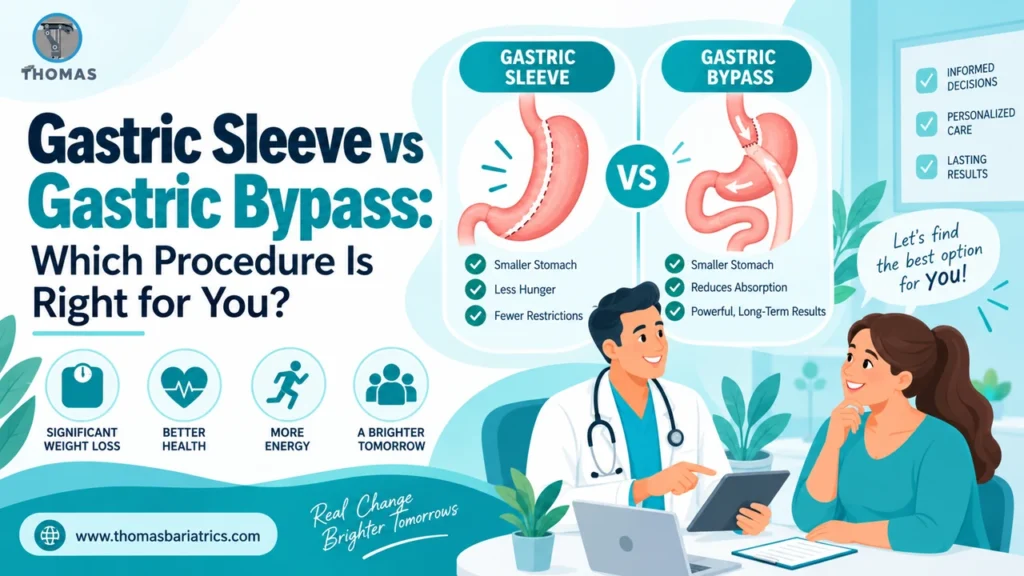
Understanding the key differences between gastric sleeve and gastric bypass can help you have a more informed discussion with your bariatric surgeon and determine which option best supports your health goals.
Understanding Bariatric Surgery
Bariatric surgery is a medical treatment for obesity that helps patients lose weight by changing how the digestive system works. It is recommended for individuals who have not achieved lasting weight loss through diet, exercise, and other non surgical methods.
In addition to supporting weight loss, bariatric surgery can improve or even resolve many obesity related conditions, including:
- Type 2 diabetes
- High blood pressure
- Obstructive sleep apnea
- High cholesterol
- Joint pain
- Fatty liver disease
The two most commonly performed bariatric procedures today are sleeve gastrectomy and Roux-en-Y gastric bypass.
What Is Gastric Sleeve Surgery?
Gastric sleeve surgery, also called sleeve gastrectomy, removes approximately 80 percent of the stomach, leaving behind a narrow, tube shaped stomach or “sleeve.”
Because the stomach is much smaller, patients feel full after eating much smaller portions. The procedure also reduces levels of the hunger hormone ghrelin, helping many patients experience decreased appetite.
Benefits of Gastric Sleeve Surgery
- Simpler procedure compared to gastric bypass
- No intestinal rerouting
- Shorter operating time
- Significant long term weight loss
- Lower risk of certain nutritional deficiencies compared to gastric bypass
- Usually shorter hospital stay
Gastric sleeve has become the most commonly performed bariatric procedure worldwide because of its balance of effectiveness and safety.
What Is Gastric Bypass Surgery?
Gastric bypass surgery, also known as Roux-en-Y gastric bypass, creates a small stomach pouch and connects it directly to a lower portion of the small intestine.
This changes both the amount of food you can eat and the way your body absorbs calories and nutrients.
In addition to restricting food intake, gastric bypass produces hormonal changes that help improve blood sugar control and metabolism.
Benefits of Gastric Bypass Surgery
- Excellent long term weight loss
- Strong improvement in Type 2 diabetes
- May reduce acid reflux symptoms in many patients
- Long history of successful outcomes
- Effective for patients with severe obesity
Because part of the digestive tract is bypassed, lifelong vitamin and mineral supplementation is especially important after this procedure.
Gastric Sleeve vs Gastric Bypass: Key Differences
| Feature | Gastric Sleeve | Gastric Bypass |
|---|---|---|
| Procedure | Removes most of the stomach | Creates a small stomach pouch and bypasses part of the small intestine |
| Stomach Size | Smaller sleeve shaped stomach | Small stomach pouch |
| Intestinal Changes | No | Yes |
| Food Absorption | Mostly unchanged | Reduced absorption of some nutrients |
| Appetite | Reduced through hormonal changes | Reduced through restriction and hormonal changes |
| Typical Surgery Time | Generally shorter | Generally longer |
| Vitamin Requirements | Lifelong supplements recommended | Lifelong supplements are essential |
| Procedure Complexity | Less complex | More complex |
Both procedures are performed laparoscopically in most cases, meaning smaller incisions and faster recovery for many patients.
Which Procedure Produces More Weight Loss?
Both surgeries are highly effective for long term weight loss.
Many patients lose a substantial percentage of their excess body weight during the first 12 to 18 months after surgery. Individual results depend on factors such as:
- Starting weight
- Overall health
- Physical activity
- Nutrition
- Commitment to follow up care
Some studies suggest gastric bypass may produce slightly greater average excess weight loss for certain patients, but both procedures can deliver excellent results when paired with healthy lifestyle changes.
Rather than focusing only on the number of pounds lost, surgeons also consider improvements in overall health and obesity related conditions.
Which Procedure Is Better for Diabetes?
Both procedures can significantly improve Type 2 diabetes.
However, gastric bypass has demonstrated particularly strong effects on blood sugar control due to changes in digestive hormones and nutrient flow.
Patients with difficult to control diabetes may be candidates for gastric bypass, although the best choice depends on the individual’s overall medical condition.
What About Acid Reflux?
This is an important factor when choosing a procedure.
Patients with moderate to severe gastroesophageal reflux disease (GERD) may benefit more from gastric bypass because it often improves reflux symptoms.
On the other hand, gastric sleeve surgery may worsen reflux in some individuals or lead to new symptoms after surgery.
Your surgeon may recommend additional testing if reflux is a concern before deciding which procedure is most appropriate.
Recovery After Surgery
Recovery is similar for both procedures.
Many patients:
- Stay in the hospital for one to two days
- Begin walking within hours of surgery
- Return to light daily activities within a few weeks
- Follow a staged diet beginning with liquids before gradually introducing solid foods
Regardless of the procedure, following dietary guidelines and attending follow up appointments are essential for long term success.
Risks to Consider
Every surgery carries potential risks, including bariatric surgery.
Possible complications may include:
- Bleeding
- Infection
- Blood clots
- Leakage from surgical connections
- Nutritional deficiencies
- Dehydration
The overall risk of serious complications is low when surgery is performed by experienced bariatric surgeons at accredited centers. Your surgeon will explain the specific risks and benefits based on your medical history.
How Your Surgeon Helps You Choose
There is no single “best” bariatric procedure for everyone.
Your surgeon will consider several factors, including:
- Body Mass Index (BMI)
- Existing medical conditions
- Type 2 diabetes
- Acid reflux
- Previous abdominal surgeries
- Eating habits
- Long term weight loss goals
- Overall health
The decision should always be personalized rather than based solely on online comparisons.
Frequently Asked Questions
Which surgery is safer?
Both gastric sleeve and gastric bypass are considered safe when performed by experienced bariatric surgeons. Each has its own benefits and risks, and your surgeon will recommend the option that best fits your health needs.
Which procedure has a faster recovery?
Recovery timelines are similar. Many patients return to desk work within two to four weeks, depending on their overall health and the nature of their job.
Will I need vitamins after surgery?
Yes. Lifelong vitamin and mineral supplementation is recommended after both procedures, with gastric bypass patients typically requiring closer nutritional monitoring because nutrient absorption is reduced.
Can bariatric surgery cure obesity?
Bariatric surgery is a highly effective treatment for obesity, but it is not a cure. Long term success depends on healthy eating, regular physical activity, and ongoing follow up with your healthcare team.
Choosing the Right Procedure Starts with the Right Conversation
Both gastric sleeve surgery and gastric bypass surgery have helped millions of people achieve meaningful weight loss and improve their overall health. The right procedure depends on your medical history, lifestyle, and long term goals, not simply on which surgery is more popular.
A comprehensive evaluation with an experienced bariatric surgeon is the best way to determine which option is right for you. Together, you can develop a personalized treatment plan designed to support lasting weight loss and better health.
Ready to take the next step toward lasting change?
Schedule a consultation with Thomas Bariatrics today and start your personalized path to better health.
Medical Disclaimer:
This content is for informational purposes only and does not constitute medical advice, diagnosis, or treatment. Always consult a qualified healthcare provider regarding any medical condition or treatment decisions. Individual results may vary.
About the Author

Dr. David Thomas
Bariatric Surgeon
Dr. Thomas, a skilled bariatric surgeon at Methodist Hospital Landmark Bariatrics and Weight Loss Center, treats obesity, GERD, hernias, and more with patient-focused care. Rated 4.9/5, he’s board-certified, a Fellow of ACS and ASMBS, and serves as Medical Director of the bariatric program. His multilingual staff ensures inclusive care, accepts most insurance plans, and welcomes new patients seeking expert surgical solutions for lasting health and wellness.

 Qubopro.com