
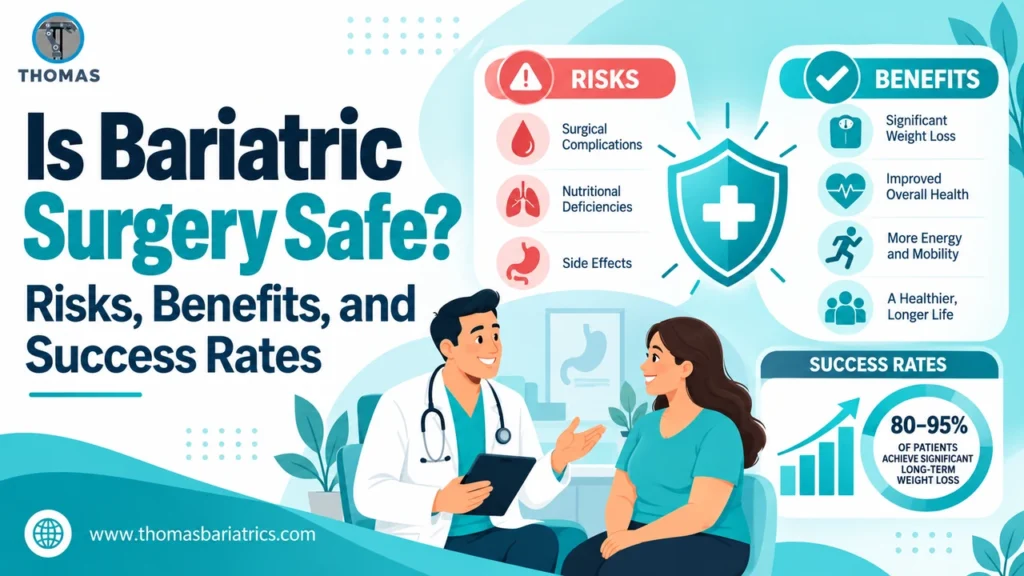
If you’re considering bariatric surgery, one of your first questions is likely, “Is bariatric surgery safe?” That’s an important question, and one that deserves an evidence based answer.
Like any surgical procedure, bariatric surgery carries potential risks. However, advances in surgical techniques, anesthesia, and postoperative care have made modern bariatric surgery safer than ever. For many people living with obesity, the health risks of remaining untreated may be greater than the risks associated with surgery.
Understanding both the benefits and the possible complications can help you make an informed decision with your bariatric surgeon.
How Safe Is Bariatric Surgery Today?
Modern bariatric procedures are typically performed using minimally invasive laparoscopic techniques. These procedures use several small incisions rather than one large incision, which often results in:
- Less postoperative pain
- Smaller scars
- Shorter hospital stays
- Faster recovery
- Lower risk of wound complications
Large studies have shown that bariatric surgery has a low risk of serious complications when performed by experienced surgeons at accredited bariatric centers. The safety of your procedure depends on several factors, including your overall health, the type of surgery performed, and adherence to your surgeon’s recommendations before and after surgery.
Benefits of Bariatric Surgery
While weight loss is one of the most visible outcomes, bariatric surgery offers many health benefits that extend beyond the number on the scale.
Potential benefits include:
Significant Weight Loss
Many patients achieve substantial weight loss during the first 12 to 18 months after surgery, especially when combined with healthy eating and regular physical activity.
Improved Type 2 Diabetes
Many patients experience improved blood sugar control after bariatric surgery. Some individuals are able to reduce or discontinue certain diabetes medications under medical supervision.
Better Heart Health
Weight loss may contribute to improvements in:
- High blood pressure
- High cholesterol
- Cardiovascular risk factors
These improvements can lower the overall risk of heart disease.
Relief from Sleep Apnea
Weight reduction often improves obstructive sleep apnea, allowing some patients to sleep better and experience improved daytime energy.
Reduced Joint Pain
Losing excess weight decreases pressure on the knees, hips, and lower back, making everyday movement more comfortable for many patients.
Improved Quality of Life
Patients frequently report:
- Increased mobility
- Greater confidence
- Improved physical function
- Enhanced ability to participate in daily activities
Results vary from person to person, but these improvements can have a meaningful impact on long term health and well being.
Understanding the Risks
Although bariatric surgery is considered safe, no operation is completely without risk.
Possible complications include:
Bleeding
Bleeding may occur during or after surgery. Most cases are uncommon and can be managed with prompt medical care.
Infection
As with any surgery, there is a small risk of infection at the incision sites or internally.
Blood Clots
Blood clots can develop after surgery, particularly in the legs. Early walking and preventive medications help reduce this risk.
Leaks
Rarely, leakage can occur where the stomach or intestines have been divided or connected. This requires immediate medical attention.
Dehydration
Because patients eat and drink much smaller amounts after surgery, dehydration is one of the more common reasons for readmission if fluid intake is inadequate.
Nutritional Deficiencies
Procedures such as gastric bypass may increase the risk of vitamin and mineral deficiencies. Lifelong supplementation and regular blood work help prevent these problems.
Your bariatric team will explain these risks in detail and monitor your recovery closely.
Factors That Influence Surgical Safety
Several factors can affect the safety of bariatric surgery.
Overall Health
Patients with heart disease, lung disease, or other chronic conditions may require additional evaluation before surgery.
Body Mass Index (BMI)
Higher BMI levels may increase surgical complexity, although bariatric surgery is specifically designed to help patients with obesity.
Smoking
Smoking increases the risk of complications and delayed healing. Patients are usually advised to stop smoking well before surgery.
Following Preoperative Instructions
Completing recommended testing, following the prescribed preoperative diet, and reviewing medications with your surgeon all contribute to safer surgery.
Success Rates of Bariatric Surgery
Bariatric surgery has consistently demonstrated positive long term outcomes for appropriately selected patients.
Success is measured by more than weight loss alone.
Healthcare providers also evaluate:
- Improvement in obesity related diseases
- Better mobility
- Improved quality of life
- Long term weight maintenance
- Nutritional health
Patients who actively participate in follow up care, maintain healthy eating habits, and stay physically active are more likely to achieve lasting success.
How You Can Reduce Your Risk
While your surgical team plays a major role in your care, there are several steps you can take to improve safety and recovery.
Choose an Experienced Bariatric Surgeon
Selecting a qualified bariatric surgeon with extensive experience and a comprehensive care team is one of the most important decisions you can make.
Follow Your Nutrition Plan
Proper nutrition before and after surgery supports healing and reduces the risk of complications.
Stay Active
Walking soon after surgery helps improve circulation and lowers the risk of blood clots.
Stay Hydrated
Drinking enough fluids throughout the day helps prevent dehydration and supports recovery.
Attend Every Follow Up Appointment
Regular visits allow your healthcare team to monitor your weight loss, nutritional status, and overall health.
When Should You Contact Your Surgeon?
While mild discomfort is expected during recovery, you should seek medical attention if you experience:
- Persistent fever
- Severe abdominal pain
- Difficulty breathing
- Persistent vomiting
- Signs of dehydration
- Redness or drainage from incision sites
Early evaluation allows your healthcare team to address potential complications promptly.
Frequently Asked Questions
Is bariatric surgery safer than living with severe obesity?
For many eligible patients, bariatric surgery can significantly reduce the health risks associated with severe obesity. Your surgeon will evaluate your individual health profile to determine whether the benefits outweigh the risks.
Which bariatric procedure is the safest?
Both gastric sleeve surgery and gastric bypass surgery are considered safe when performed by experienced bariatric surgeons. The best procedure depends on your medical history, weight loss goals, and existing health conditions.
Can complications be prevented?
While no surgery is completely risk free, carefully following your surgeon’s recommendations before and after surgery can significantly reduce the likelihood of complications.
How long is the recovery period?
Many patients return to light daily activities within two to four weeks, although complete recovery and long term lifestyle adjustments continue over several months.
Making an Informed Decision
Bariatric surgery is one of the most effective treatments for severe obesity and has helped countless individuals improve their health and quality of life. Although every surgery carries risks, modern bariatric procedures have an excellent safety profile when performed by experienced surgeons and supported by comprehensive follow up care.
The best way to determine whether bariatric surgery is right for you is to schedule a consultation with a qualified bariatric surgeon. Together, you can review your health history, discuss your options, and develop a personalized treatment plan that supports your long term success.
Ready to take the next step toward lasting change?
Schedule a consultation with Thomas Bariatrics today and start your personalized path to better health.
Medical Disclaimer:
This content is for informational purposes only and does not constitute medical advice, diagnosis, or treatment. Always consult a qualified healthcare provider regarding any medical condition or treatment decisions. Individual results may vary.
About the Author

Dr. David Thomas
Bariatric Surgeon
Dr. Thomas, a skilled bariatric surgeon at Methodist Hospital Landmark Bariatrics and Weight Loss Center, treats obesity, GERD, hernias, and more with patient-focused care. Rated 4.9/5, he’s board-certified, a Fellow of ACS and ASMBS, and serves as Medical Director of the bariatric program. His multilingual staff ensures inclusive care, accepts most insurance plans, and welcomes new patients seeking expert surgical solutions for lasting health and wellness.

 Qubopro.com