
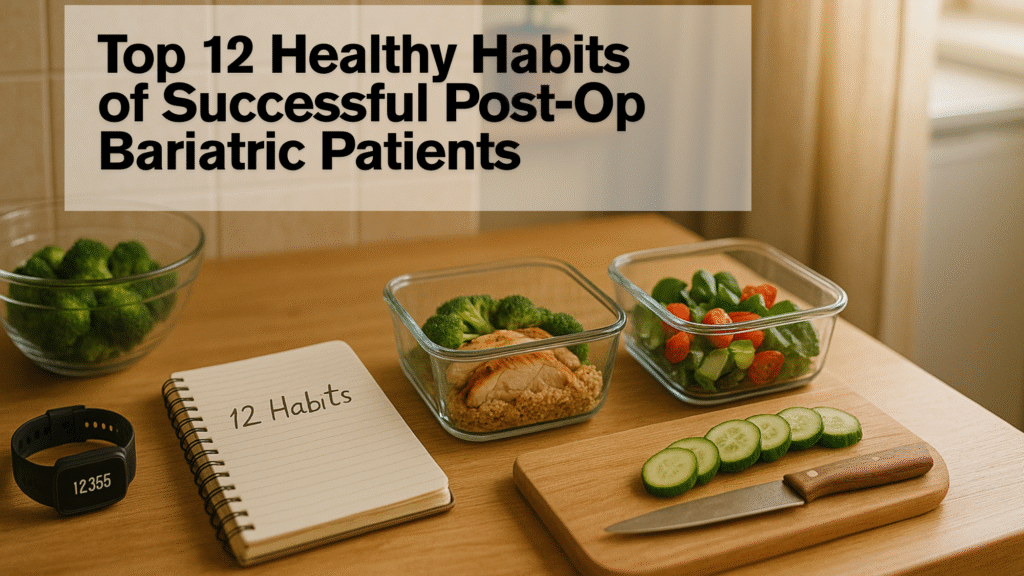
Success after weight loss surgery isn’t just about the procedure—it’s about long-term behavior change. These bariatric success habits can help you maintain weight loss and live a healthier life.
1. Follow Your Nutrition Plan
Stick to your dietitian’s recommendations for portion control, macronutrients, and hydration.
2. Eat Protein First
Always eat protein-rich foods like chicken, eggs, or tofu before carbs or fats.
3. Hydrate Like It’s Your Job
Drink at least 64 oz of water daily, but don’t drink 30 minutes before or after meals.
4. Avoid Liquid Calories
Skip sugary drinks, alcohol, and smoothies that are high in calories and low in nutrition.
5. Take Vitamins Daily
Bariatric patients need lifelong supplementation—don’t skip multivitamins, B12, calcium, and iron.
6. Keep a Food Journal
Tracking meals helps you stay accountable and spot patterns that can lead to weight gain.
7. Eat Mindfully
Chew thoroughly, avoid distractions, and stop eating when you feel satisfied—not full.
8. Plan Your Meals
Meal prep prevents impulsive eating and keeps your progress on track.
9. Move Your Body
Start with walking, then progress to strength training or cardio with your doctor’s approval.
10. Manage Stress Without Food
Practice mindfulness, journaling, or breathing techniques to cope with emotional triggers.
11. Sleep 7–9 Hours a Night
Poor sleep can lead to weight gain and hunger hormone imbalance.
12. Stay Connected to Support
Join bariatric support groups, talk to a therapist, or follow up with your care team.
FAQs
Q1: Why is protein so important after surgery?
A1: Protein helps preserve muscle mass, aids healing, and keeps you full longer.
Q2: Do I need to track my weight every day?
A2: Not necessarily. Weekly tracking is enough for most to monitor trends and stay motivated.
Q3: What if I gain weight again?
A3: Weight regain can happen. Return to your basics, reconnect with your bariatric team, and don’t give up.
Q4: How do I handle social events post-surgery?
A4: Eat beforehand, bring a healthy dish, and remember your long-term goals.
Want to speak with a bariatric care expert?
Contact us today to schedule a consultation or ask any post-surgery questions.


 Qubopro.com