
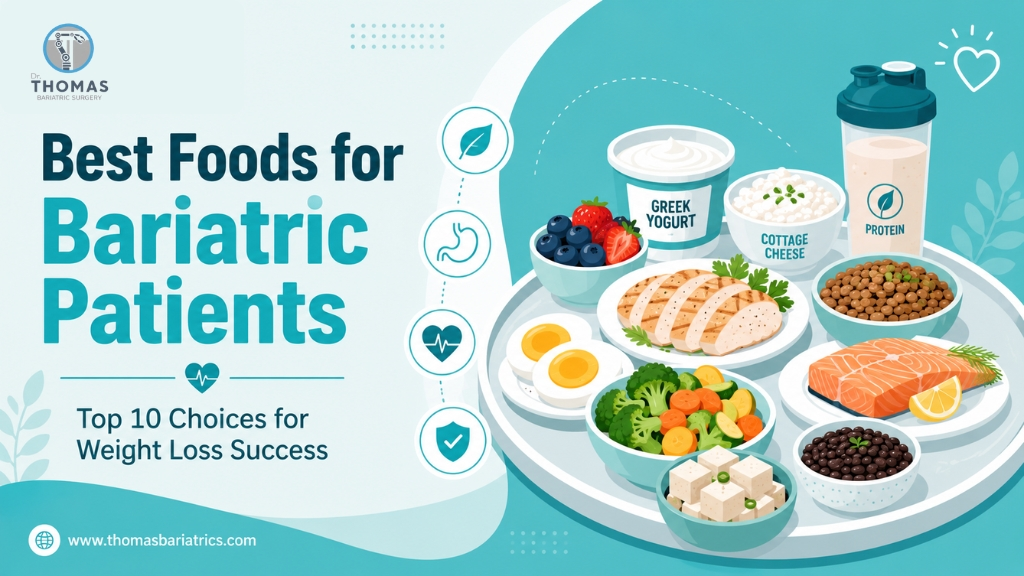
After bariatric surgery, your food choices matter more than ever. Whether you had gastric sleeve surgery, gastric bypass surgery, or another weight loss surgery, your stomach capacity is smaller, your digestion may feel different, and your body needs nutrient-dense foods to support healing, energy, muscle maintenance, and long-term weight loss.
The best bariatric-friendly foods are usually high in protein, lower in added sugar, easy to portion, and rich in vitamins and minerals. A strong post-bariatric surgery diet helps you lose weight safely while reducing the risk of nutritional deficiencies, fatigue, muscle loss, and weight regain.
This guide covers the top 10 bariatric-friendly foods to add to your diet for successful weight loss, along with practical tips for eating them after surgery.
Why Bariatric-Friendly Foods Matter After Weight Loss Surgery
After bariatric surgery, patients usually follow a staged eating plan that begins with liquids, then moves to pureed foods, soft foods, and eventually regular foods as tolerated. Mayo Clinic notes that patients are typically advised to eat slowly, take small bites, chew thoroughly, focus on high-protein foods first, avoid foods high in fat and sugar, and take recommended vitamin and mineral supplements.
This means your diet should focus on quality, not quantity. Since you can only eat smaller portions, every bite should help your body recover and support your bariatric weight loss journey.
A good bariatric diet usually supports:
- Protein intake
- Hydration
- Wound healing
- Muscle maintenance
- Healthy digestion
- Blood sugar control
- Long-term weight loss
- Prevention of nutrient deficiencies
The American Society for Metabolic and Bariatric Surgery also explains that bariatric patients generally need lifelong vitamins and minerals, such as a multivitamin, vitamin B12, calcium, vitamin D, and iron, based on their program’s recommendations.
1. Eggs
Eggs are one of the best high-protein foods after bariatric surgery because they are soft, versatile, affordable, and easy to prepare. They are often easier to tolerate than dry meats, especially during the soft-food stage.
Eggs provide protein, healthy fats, vitamin B12, choline, and other nutrients that support energy and recovery.
Bariatric-friendly ways to eat eggs:
- Scrambled eggs
- Boiled eggs
- Egg salad with Greek yogurt
- Omelet with soft vegetables
- Egg bites with cottage cheese
- Soft poached eggs
Tip:
Avoid frying eggs in too much oil or butter. Keep portions small and eat slowly. If eggs feel heavy early after surgery, try softer preparations like scrambled eggs or egg bites.
2. Greek Yogurt
Plain Greek yogurt is a bariatric-friendly favorite because it is high in protein, smooth in texture, and easy to include in meals or snacks. It can be especially helpful when you are trying to meet protein goals without eating large portions.
Choose plain, low-sugar or no-added-sugar Greek yogurt. Flavored yogurts can contain a surprising amount of added sugar, which may slow weight loss or cause discomfort for some bariatric patients.
Benefits of Greek yogurt after bariatric surgery:
- High in protein
- Soft and easy to eat
- Good for breakfast or snacks
- Can be mixed with fruit or protein powder
- Provides calcium
Bariatric-friendly ideas:
- Greek yogurt with berries
- Greek yogurt with cinnamon
- Greek yogurt smoothie
- Greek yogurt dip
- Greek yogurt mixed with tuna or chicken salad
Greek yogurt works well in a post bariatric surgery meal plan because it is simple, filling, and nutrient-dense.
3. Lean Chicken
Lean chicken is a strong source of protein and can support muscle maintenance during rapid weight loss. Mayo Clinic Health System recommends eating high-protein foods at the beginning of each meal and lists lean proteins such as poultry, fish, eggs, and low-fat cottage cheese as good options after bariatric surgery.
Chicken can be very useful in a bariatric diet for weight loss, but texture matters. Dry chicken may be difficult to tolerate after gastric sleeve or gastric bypass surgery.
Better chicken options:
- Slow-cooked shredded chicken
- Ground chicken
- Moist chicken salad
- Chicken soup
- Soft chicken meatballs
- Chicken with broth or light sauce
Tip:
Avoid fried chicken, breaded chicken, and heavy creamy sauces. Choose grilled, baked, shredded, or slow-cooked chicken instead.
4. Fish
Fish is one of the best bariatric-friendly protein foods because it is usually softer and easier to chew than many meats. It also provides important nutrients like omega-3 fatty acids, vitamin D, and high-quality protein.
Good fish options include:
- Salmon
- Tuna
- Cod
- Tilapia
- Trout
- Sardines
- Halibut
Bariatric-friendly ways to eat fish:
- Baked salmon
- Tuna salad with Greek yogurt
- Soft fish tacos without heavy toppings
- Fish with steamed vegetables
- Salmon patties
- Tuna lettuce cups
Tip:
Avoid deep-fried fish and heavy sauces. If fish feels dry, add a small amount of broth, yogurt-based sauce, or lemon for moisture.
5. Cottage Cheese
Cottage cheese is another excellent soft protein food after bariatric surgery. It is easy to portion, requires little preparation, and can work as a snack, breakfast, or light meal.
It provides protein and calcium, making it helpful for bariatric patients who need nutrient-dense foods in small amounts.
Bariatric-friendly ways to eat cottage cheese:
- Cottage cheese with berries
- Cottage cheese with cinnamon
- Cottage cheese with soft scrambled eggs
- Cottage cheese blended into smoothies
- Cottage cheese with cucumber
- Cottage cheese as a creamy dip base
Tip:
Choose low-fat or reduced-fat cottage cheese if recommended by your dietitian. Watch sodium levels if you have high blood pressure or fluid-related restrictions.
6. Beans and Lentils
Beans and lentils are nutrient-dense foods that provide plant-based protein, fiber, iron, and complex carbohydrates. They can be a good option for bariatric patients who want variety beyond animal proteins.
Good choices include:
- Lentils
- Black beans
- Chickpeas
- Pinto beans
- Kidney beans
- White beans
- Split peas
Bariatric-friendly ideas:
- Lentil soup
- Mashed black beans
- Hummus
- Bean chili with lean protein
- Soft chickpea salad
- Pureed bean soup
Tip:
Beans can cause gas or bloating for some people after weight loss surgery. Start with small portions and chew well. If you are early in recovery, follow your bariatric team’s instructions before adding beans.
7. Tofu
Tofu is a great bariatric-friendly food for patients who prefer plant-based protein or need softer protein options. It is easy to digest for many people, absorbs flavor well, and can be used in savory or blended dishes.
Benefits of tofu:
- Soft texture
- Plant-based protein
- Easy to portion
- Works in soups, stir-fries, and scrambles
- Can be blended into smoothies or sauces
Bariatric-friendly tofu ideas:
- Soft tofu scramble
- Tofu soup
- Baked tofu cubes
- Tofu with steamed vegetables
- Blended tofu pudding with no added sugar
- Tofu added to protein smoothies
Tip:
Avoid deep-fried tofu or tofu dishes with sugary sauces. Keep it simple and protein-focused.
8. Soft Cooked Vegetables
Vegetables are important after bariatric surgery because they provide fiber, vitamins, minerals, and antioxidants. However, raw vegetables may be harder to tolerate early after surgery, so soft cooked vegetables are often a better starting point.
Good bariatric-friendly vegetables include:
- Zucchini
- Carrots
- Green beans
- Spinach
- Mushrooms
- Cauliflower
- Broccoli
- Bell peppers
- Squash
Bariatric-friendly ways to eat vegetables:
- Steamed vegetables
- Roasted soft vegetables
- Vegetable soup
- Pureed vegetable soup
- Omelet with spinach
- Chicken with soft vegetables
Tip:
Protein should usually come first at meals after bariatric surgery. Once you have eaten your protein, add small portions of vegetables for fiber and nutrients.
9. Berries
Berries are one of the best fruits for a bariatric weight loss diet because they are naturally sweet, rich in antioxidants, and usually lower in sugar than many other fruits.
Good options include:
- Blueberries
- Strawberries
- Raspberries
- Blackberries
Bariatric-friendly ways to eat berries:
- Greek yogurt with berries
- Protein smoothie with berries
- Cottage cheese with berries
- Oatmeal with berries
- Berry chia pudding, if tolerated
Tip:
Avoid fruit juices and fruit syrups. Whole berries are usually a better choice because they provide fiber and are easier to portion.
10. Protein Shakes or Protein Powder
Protein shakes can be helpful after bariatric surgery, especially when it is difficult to meet protein goals through food alone. UCSF Health notes that after bariatric surgery, patients may use high-protein, low-calorie liquid supplements during the blended and pureed food stages to help meet protein needs.
Protein shakes should not replace healthy eating forever, but they can be useful during recovery or on days when your appetite is low.
What to look for in a bariatric protein shake:
- High protein
- Low sugar
- Low fat
- Reasonable calories
- Easy to digest
- Approved by your bariatric team
Bariatric-friendly uses:
- Breakfast protein shake
- Protein smoothie with Greek yogurt
- Protein coffee, if approved
- Protein pudding
- Protein powder mixed into oatmeal or yogurt
Tip:
Avoid high-calorie “mass gainer” shakes, sugary smoothies, and drinks that are marketed as healthy but contain lots of added sugar.
Bonus Bariatric-Friendly Foods to Consider
Once your bariatric team clears you for regular foods, you may also add more variety with:
- Turkey
- Lean ground beef
- Shrimp
- Low-fat cheese
- Avocado in small portions
- Oatmeal
- Quinoa
- Sweet potatoes
- Nuts or nut butter in small amounts
- Chia seeds, if tolerated
The key is portion control, protein priority, and tolerance.
Foods Bariatric Patients Should Usually Limit
Some foods can slow progress or cause discomfort after bariatric surgery. Mayo Clinic recommends avoiding high-fat and high-sugar foods after gastric bypass because they can move quickly through the digestive system and cause dumping syndrome.
Common foods to limit include:
- Fried foods
- Sugary drinks
- Candy
- Cakes and pastries
- Chips
- Alcohol
- Carbonated drinks, if restricted
- High-fat fast food
- Large portions of bread, rice, or pasta
- High-calorie coffee drinks
- Liquid calories
This does not mean your diet has to feel boring. It means your food choices should support healing, protein intake, and long-term weight management.
Simple Bariatric Eating Tips for Successful Weight Loss
Eat Protein First
Protein helps preserve muscle, supports fullness, and plays a major role in recovery. Choose protein first, then add vegetables or other foods as tolerated.
Eat Slowly
Take small bites, chew well, and stop when you feel satisfied. Eating too quickly can cause discomfort, nausea, or vomiting.
Keep Portions Small
Your stomach capacity is reduced after weight loss surgery. Small portions help you avoid overeating and discomfort.
Avoid Drinking With Meals If Advised
Many bariatric programs recommend drinking fluids between meals instead of during meals. Follow your surgeon or dietitian’s instructions.
Stay Hydrated
Sip water throughout the day. Dehydration can cause fatigue, headaches, dizziness, and constipation.
Take Your Vitamins
Bariatric vitamins are not optional for many patients. ASMBS explains that patients who do not take recommended vitamins daily may develop serious vitamin and mineral deficiencies.
Follow Your Bariatric Team’s Plan
Every patient is different. Your ideal bariatric diet depends on your procedure, stage of recovery, medical history, and tolerance.
Sample Bariatric-Friendly Meal Ideas
Breakfast
Scrambled egg with cottage cheese
Greek yogurt with berries
Protein shake with unsweetened almond milk
Lunch
Tuna salad with cucumber slices
Shredded chicken soup
Turkey lettuce wraps
Dinner
Baked fish with soft cooked vegetables
Lean chicken with cauliflower mash
Lentil soup with added protein
Snacks
Cottage cheese
Boiled egg
Greek yogurt
Protein pudding
String cheese, if tolerated
These meals are simple, high-protein, and easy to adjust for different recovery stages.
Final Thoughts
The best bariatric-friendly foods for successful weight loss are high in protein, nutrient-dense, easy to portion, and gentle on your digestive system. Eggs, Greek yogurt, lean chicken, fish, cottage cheese, beans, lentils, tofu, soft vegetables, berries, and protein shakes can all support your post bariatric surgery diet.
After gastric sleeve surgery, gastric bypass surgery, or another weight loss surgery, food is not just about calories. It is about healing, strength, energy, and long-term success.
Always follow your bariatric surgeon’s and dietitian’s guidance, especially during the early recovery stages. With the right foods, consistent habits, hydration, vitamins, and support, you can build a healthier lifestyle and improve your chances of lasting weight loss.
FAQs
1. What are the best foods to eat after bariatric surgery?
The best foods after bariatric surgery are usually high-protein, low-sugar, nutrient-dense foods such as eggs, Greek yogurt, lean chicken, fish, cottage cheese, beans, lentils, tofu, soft vegetables, and protein shakes.
2. Why is protein important after bariatric surgery?
Protein supports healing, muscle maintenance, fullness, and long-term weight loss. Bariatric patients are often advised to prioritize protein foods first at meals.
3. Can I eat vegetables after gastric sleeve surgery?
Yes, but you may need to start with soft cooked vegetables once your bariatric team clears you. Raw vegetables may be harder to tolerate early after surgery.
4. Is Greek yogurt good after bariatric surgery?
Yes, plain Greek yogurt is often a good bariatric-friendly food because it is high in protein, soft, versatile, and easy to portion.
5. Can I eat fruit after bariatric surgery?
Yes, but choose small portions and focus on lower-sugar, fiber-rich fruits like berries. Avoid fruit juice and sugary fruit products.
Ready to take the next step toward lasting change?
Schedule a consultation with Thomas Bariatrics today and start your personalized path to better health.
Medical Disclaimer:
This content is for informational purposes only and does not constitute medical advice, diagnosis, or treatment. Always consult a qualified healthcare provider regarding any medical condition or treatment decisions. Individual results may vary.

 Qubopro.com