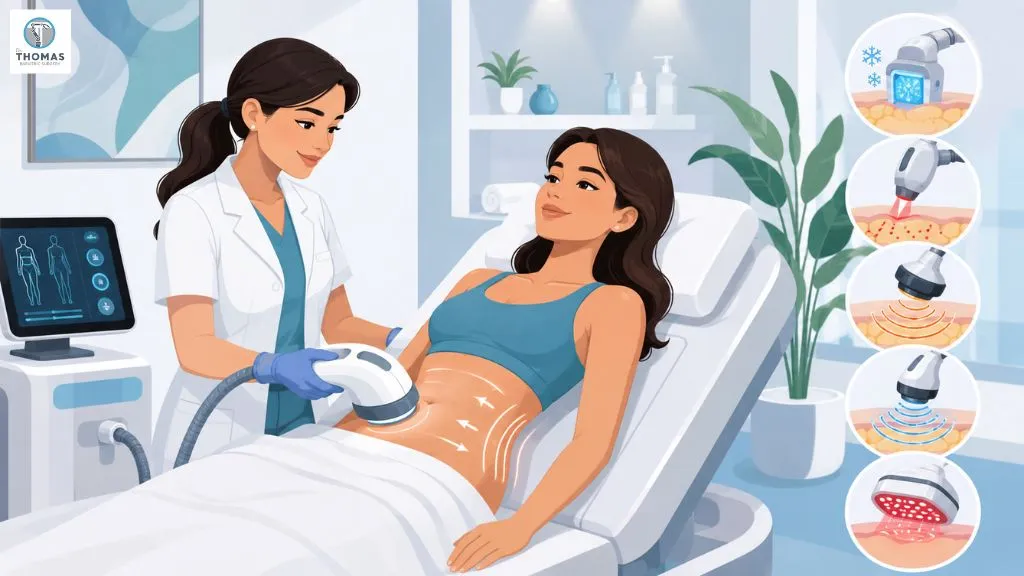
Non-invasive fat reduction has become popular because many people want to reduce stubborn fat without surgery, anesthesia, incisions, or long recovery time. Treatments like fat freezing, CoolSculpting, laser fat reduction, ultrasound fat reduction, radiofrequency body contouring, and low-level laser therapy are often marketed as easy ways to shape the body without liposuction.
But the real question is: what is the safest non-invasive fat reduction option?
The most honest answer is that there is no single “safest” option for every person. Safety depends on your body, medical history, treatment area, skin type, fat thickness, device used, and provider experience. However, for many healthy candidates, low-level light therapy may have one of the gentlest safety profiles, while cryolipolysis or fat freezing is one of the most widely known and studied non-surgical fat reduction treatments. The best choice should always be made after a professional consultation.
This guide explains how non-invasive fat reduction works, compares the safest body contouring options, and helps you understand what to ask before treatment.
What Is Non-Invasive Fat Reduction?
Non-invasive fat reduction refers to body contouring treatments that reduce small pockets of fat without surgery. These treatments are performed on the skin surface and do not involve cutting the skin or physically removing fat like liposuction. The FDA explains that non-invasive body contouring procedures do not remove tissue from the body and are different from surgical procedures such as tummy tuck surgery or liposuction.
These treatments are commonly used for areas such as:
- Belly fat
- Love handles
- Flanks
- Thighs
- Upper arms
- Back fat
- Bra fat
- Double chin
- Abdomen
- Hips
Non-invasive body contouring is best for people who are near a stable weight but have small areas of stubborn fat. It is not a treatment for obesity, and it should not be viewed as a replacement for weight loss, diet, exercise, bariatric surgery, or medical weight management. The FDA clearly states that non-invasive body contouring does not treat obesity, does not create weight loss, and does not provide the health benefits associated with weight loss.
Common Non-Invasive Fat Reduction Options
There are several types of non-surgical fat reduction treatments. Each works differently and has its own benefits, limitations, and risks.
1. Cryolipolysis / Fat Freezing
Cryolipolysis, often known by the brand name CoolSculpting, uses controlled cooling to target fat cells under the skin. The treated fat cells are gradually cleared by the body over time. The FDA describes cryolipolysis as a treatment that uses cold temperatures to reduce visible fat bulges without surgery, with fat cleared by the immune system over about two to three months.
2. Low-Level Light Therapy
Low-level light therapy, also called LLLT or photobiomodulation, uses very low doses of light that do not heat the skin or fat. The FDA notes that LLLT may temporarily reduce the circumference of the treated area and has few risks because the energy level is extremely low.
3. Laser Fat Reduction
Laser-based fat reduction uses controlled heat from light-based energy to damage fat cells. Some people search for this as laser lipolysis, non-invasive laser fat removal, or brand names like SculpSure.
4. Ultrasound Fat Reduction
Ultrasound fat reduction uses focused sound waves to disrupt fat cells. The FDA notes that ultrasound energy enters the fat layer under the skin and can cause fat cells to rupture, which may reduce circumference in the treated area.
5. Radiofrequency Fat Reduction
Radiofrequency body contouring uses controlled heat to target fat and may also help improve skin tightness. The FDA explains that RF energy can heat the fat layer and may temporarily improve cellulite appearance or reduce body circumference, but only devices authorized for cosmetic use by the FDA should be used for these effects.
So, What Is the Safest Non-Invasive Fat Reduction Option?
For the lowest-energy and gentlest approach, low-level light therapy may be one of the safest non-invasive fat reduction options, especially for people who want minimal discomfort and no heat or freezing. Because LLLT does not heat the fat or skin, its risk profile is generally mild compared with thermal treatments. The FDA notes that few complications are expected because the energy level is extremely low, though rare issues like sensitivity, burns, pigmentation changes, itching, nodules, or pain may still occur.
However, “safest” does not always mean “most effective.” Low-level light therapy may produce more modest or temporary circumference reduction. If your goal is more visible fat reduction in a specific area, cryolipolysis or fat freezing may be recommended more often because it is widely used for reducing localized fat bulges. Still, fat freezing has its own rare but serious risks, including paradoxical adipose hyperplasia, or PAH, where fat grows instead of shrinking in the treated area. The FDA states that PAH does not go away on its own and may require surgery to remove the visible bulge.
So the practical answer is:
The safest non-invasive fat reduction option is the one that matches your health history, treatment area, skin type, fat thickness, and goals — performed by a qualified medical provider using an FDA-cleared device for the correct body area.
Comparing Safety: Fat Freezing vs Laser vs Ultrasound vs Radiofrequency
Fat Freezing Safety
Fat freezing is non-invasive and does not require anesthesia, stitches, or surgical downtime. Many people return to normal activities quickly. The American Academy of Dermatology says most people can return to everyday activities immediately after non-invasive fat removal, though swelling, bruising, or discomfort may occur.
Common side effects of cryolipolysis may include:
- Redness
- Swelling
- Bruising
- Tenderness
- Numbness
- Skin sensitivity
- Temporary discomfort
Less common but more serious risks may include freeze burns, prolonged numbness, nerve effects, hernia-related concerns, and PAH. The FDA also warns that fat freezing should not be performed in people with certain cold sensitivity disorders, poor circulation in the treatment area, or near a pre-existing hernia or structurally weak area.
Laser Fat Reduction Safety
Laser fat reduction uses heat, so the main safety concern is heat-related injury. The FDA notes that light-based energy procedures can cause eye injury without proper protective goggles and may not be appropriate for people who are tan, planning sun exposure, prone to dark marks after injury, sensitive to light, or taking photosensitizing medications.
Possible side effects may include:
- Redness
- Swelling
- Tenderness
- Blisters
- Burns
- Nodules
- Skin color changes
Laser fat reduction may be a good option for certain patients, but it should be performed by a trained provider using proper settings and eye protection.
Ultrasound Fat Reduction Safety
Ultrasound fat reduction avoids freezing and light exposure, but it still carries risks. The FDA explains that therapeutic ultrasound can cause burns if not performed properly and requires complete contact with the skin using ultrasound gel to reduce burn risk. It should not be used over open wounds, compromised skin, active implants such as pacemakers, or metal under the skin in the treatment area.
Possible side effects may include:
- Pain
- Redness
- Swelling
- Blisters
- Burns
- Nerve damage
Radiofrequency Fat Reduction Safety
Radiofrequency body contouring uses heat and may be helpful for patients who want both fat reduction and some skin tightening benefit. However, RF is not right for everyone. The FDA advises against RF energy devices for people with active implants such as pacemakers or implanted cardioverter defibrillators, metal under the skin, or tattoos with ink containing metal particles in the treated area.
Possible side effects may include:
- Redness
- Swelling
- Pain
- Burns
- Blisters
- Nodules
- Skin color changes
- Scarring
Who Is a Good Candidate for Non-Invasive Fat Reduction?
The best candidates for non-invasive body contouring are usually healthy adults who are close to their ideal weight but have small, stubborn fat pockets that do not respond well to diet and exercise.
You may be a good candidate if:
- You are near a stable weight
- You have pinchable fat in specific areas
- You have realistic expectations
- You want subtle fat reduction, not dramatic weight loss
- You do not want surgery or anesthesia
- You can wait several months for results
- You understand that multiple sessions may be needed
The American Society for Dermatologic Surgery states that non-invasive treatments are appropriate for excess fat removal and body contouring when patients have proper expectations, and people who see these treatments as a substitute for diet and exercise are not good candidates.
Who Should Avoid Non-Invasive Fat Reduction?
Non-invasive fat removal is not right for everyone. You may not be a good candidate if you are pregnant, have active infection in the treatment area, have certain implants, have poor circulation, have severe skin conditions, or expect major weight loss from body contouring.
You should speak with a medical provider first if you have:
- Cold sensitivity disorders
- Raynaud’s disease
- Cold urticaria
- Poor circulation
- Pacemaker or implanted defibrillator
- Metal implants in the treatment area
- Active skin infection
- Open wounds
- Hernia near the treatment area
- History of abnormal scarring
- Photosensitivity
- Skin cancer history in the treatment site
- Uncontrolled medical conditions
This is why a consultation matters. A treatment that is safe for one person may not be safe for another.
What Results Can You Expect?
Non-invasive fat reduction results are usually gradual and subtle. These treatments are designed for body sculpting, not major weight loss.
The American Academy of Dermatology explains that results from device-based non-invasive fat removal may begin to appear around three weeks, with full effects often seen between three and six months after the last treatment. It also notes that liposuction provides more dramatic results, while non-invasive fat removal produces more subtle changes.
You may notice:
- Slightly flatter stomach
- Reduced love handles
- Smaller fat bulge
- Better body contour
- Looser fit in clothing
- Mild circumference reduction
Results depend on the device, treatment area, number of sessions, fat thickness, lifestyle, and provider technique.
Is Non-Invasive Fat Reduction Permanent?
The fat cells damaged by a properly performed treatment may be removed by the body over time. However, this does not mean future weight gain is impossible. Remaining fat cells can still enlarge if you gain weight.
To maintain results, focus on:
- Healthy diet
- Regular exercise
- Stable body weight
- Hydration
- Strength training
- Good sleep
- Long-term lifestyle habits
Non-invasive body contouring works best as a finishing tool, not a replacement for healthy living.
How to Choose the Safest Fat Reduction Treatment
Before choosing any non-surgical body contouring treatment, ask these questions:
Is the device FDA-cleared for this treatment area?
FDA clearance is important because devices are reviewed for specific intended uses and body sites. Do not assume every device is cleared for every area of the body.
Who is performing the treatment?
Choose a qualified medical provider, dermatologist, plastic surgeon, or trained aesthetic professional under proper medical supervision.
What are the risks for my health history?
Ask whether your medical conditions, medications, implants, skin type, or previous surgeries affect your risk.
What side effects should I expect?
A good provider should explain common side effects and rare complications clearly.
How many sessions will I need?
Non-invasive fat reduction often requires multiple treatments. The AAD notes that treatment sessions usually last between 30 and 90 minutes and multiple sessions are commonly needed.
What happens if I do not get the result I want?
Ask about realistic outcomes, maintenance, and whether additional treatments may be needed.
Final Thoughts
The safest non-invasive fat reduction option depends on your body and goals. Low-level light therapy may be one of the gentlest options because it uses extremely low energy and does not heat or freeze tissue. Cryolipolysis, also known as fat freezing or CoolSculpting, is one of the most recognized options for reducing small fat bulges, but it carries a rare risk of paradoxical adipose hyperplasia. Laser fat reduction, ultrasound fat reduction, and radiofrequency body contouring can also be effective for the right candidates, but they involve heat or sound energy and have their own safety considerations.
The safest path is to choose a qualified provider, use an FDA-cleared device for the correct treatment area, understand the risks, and keep realistic expectations. Non-invasive fat reduction can help shape small areas of stubborn fat, but it is not a weight loss treatment and should not replace a healthy lifestyle.
FAQs
1. What is the safest non-invasive fat reduction option?
Low-level light therapy may be one of the gentlest non-invasive fat reduction options because it uses extremely low energy and does not heat or freeze fat. However, the safest option depends on your medical history, treatment area, and provider evaluation.
2. Is CoolSculpting safe?
CoolSculpting, or cryolipolysis, is non-invasive and commonly used for fat reduction, but it still has risks. Possible side effects include redness, swelling, bruising, numbness, discomfort, and rare complications such as paradoxical adipose hyperplasia.
3. Is non-invasive fat reduction better than liposuction?
Non-invasive fat reduction has less downtime and no incisions, but results are usually more subtle. Liposuction can produce more dramatic fat removal, but it is surgical and carries surgical risks.
4. Can non-invasive fat reduction help with weight loss?
No. Non-invasive fat reduction is for body contouring and small fat bulges, not obesity treatment or major weight loss. The FDA states that non-invasive body contouring does not treat obesity or provide weight-loss health benefits.
5. What is the best non-surgical treatment for belly fat?
The best non-surgical belly fat treatment depends on whether the fat is pinchable, your skin quality, your goals, and your medical history. Common options include cryolipolysis, laser fat reduction, radiofrequency, and ultrasound.
Ready to take the next step toward lasting change?
Schedule a consultation with Thomas Bariatrics today and start your personalized path to better health.
Medical Disclaimer:
This content is for informational purposes only and does not constitute medical advice, diagnosis, or treatment. Always consult a qualified healthcare provider regarding any medical condition or treatment decisions. Individual results may vary.


 Qubopro.com